


Under-16s in the UK to be banned from social media
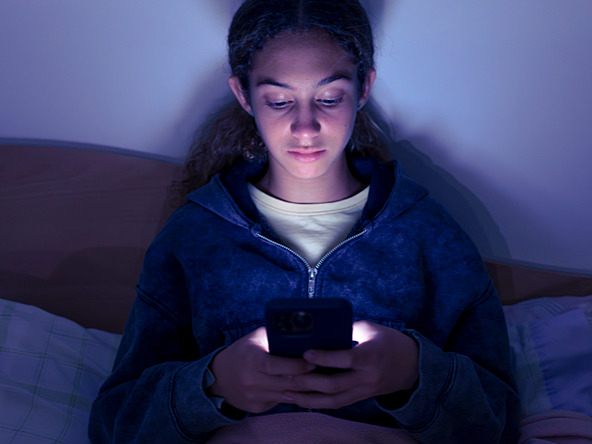
The social media ban will include user-to-user platforms such as Snapchat, TikTok, YouTube, Instagram, Facebook and X, while the government has said it does not intend for messaging services – including WhatsApp and Signal – to be included in the ban.
If passed in parliament, the ban will come into force by spring 2027.
The government plans to use the same model for the ban as Australia, introduced in December 2025, it said in a statement.
It also plans to ‘learn the lessons’ from Australia’s experience by introducing more highly effective age assurance measures to support compliance, making it harder for children to bypass safeguards.
New restrictions in addition to the ban will include blocks on livestreaming and stranger communication with children for under-16s, applying to a wider range of online services including gaming websites.
In a statement published on the government’s website, Keir Starmer, the prime minister, said: “Parents want to keep their kids safe and happy, but the online world has made that harder than ever.
“I’ve heard first hand from families crying out for change and we will do right by them.
“That’s why we’re going further than any country in the world by banning social media for under-16s and putting wider protections in place to give kids their childhood back.
“This is a line in the sand. Tech giants had their chance and failed, but we’re stepping in to protect children, back parents and set a new normal for future generations.”
In addition to banning children from social media platforms, the government will also enforce an age limit of 18 for so-called ‘romantic companion’ chatbots – designed to simulate sexual relationships or roleplay with users. The government also said it will restrict similar ‘intimate functionalities’ for under-18s on AI chatbots generally.
According to YouGov polling for the Institute for Public Policy Research (IPPR), conducted prior to the announcement of the ban and published today, around eight in 10 people support either banning under-16s from social media or forcing social media companies to remove features and content deemed inappropriate for children.
According to the IPPR, while 44% of the public would prefer a ban, with 59% preferring tighter regulation, parents of children under 16 who were polled favoured banning ( 54%) over regulating ( 36%). The sample size for the IPPR polling was 2,058, and fieldwork was undertaken online between 10th – 11th June 2026.
Research from Ipsos earlier in the year also found public support for preventing children from accessing social media. Gideon Skinner, senior director of politics, Ipsos, said: “Ipsos polling from earlier this year shows that there is clear public support from around seven in 10 (of adults at least), for banning under-16s from accessing social media platforms in the UK, and for other measures like keeping mobile phones away from classrooms. This support crosses party lines with voters of all the main parties in favour.
“This comes amid concern that not enough was being done to protect children from harmful content, and with four in ten 16-34 year-olds already worried they may be addicted to social media – even though it also remains a key media source for young people both for news and for living their daily lives.
“Having said that, people don’t believe responsibility lies purely with the government or with social media companies themselves; many believe that parents also have a role to play. And the government will still have work to do to engage with people on the details of the ban despite support in principle, to reassure the public over its effectiveness, and that it would not lead to unintended negative consequences.”
Barny Purvis, research manager, Simpson Carpenter, said: “The government has moved quickly on this because social media platforms haven’t. Personally, I’m surprised by YouTube’s inclusion as – despite being a user-to-user platform – it is a strong platform for intentional entertainment and educational searches. I am also surprised Reddit wasn’t mentioned, given it closely resembles Instagram and TikTok’s endless scrolling format. But I think this highlights the nuanced nature of this legislation that needs to be navigated carefully versus being seen as silver bullet.”
Eike Paulat, vice-president of product, Usercentrics, said: “Banning social media for under-16s once sounded radical. Today’s announcement shows that this is no longer a mainstream policy debate, it is now a reality. It reflects a broader reckoning with a digital economy built around engagement optimisation, not child wellbeing.
“For platforms, this should serve as a clear signal. Policy makers are no longer willing to rely on platforms to self-regulate when it comes to protecting younger users. The companies that succeed will not be the ones with the toughest gates, but the ones willing to design responsibly for younger users from the ground up.”

We hope you enjoyed this article.
Research Live is published by MRS.
The Market Research Society (MRS) exists to promote and protect the research sector, showcasing how research delivers impact for businesses and government.
Members of MRS enjoy many benefits including tailoured policy guidance, discounts on training and conferences, and access to member-only content.
For example, there's an archive of winning case studies from over a decade of MRS Awards.
Find out more about the benefits of joining MRS here.










0 Comments