


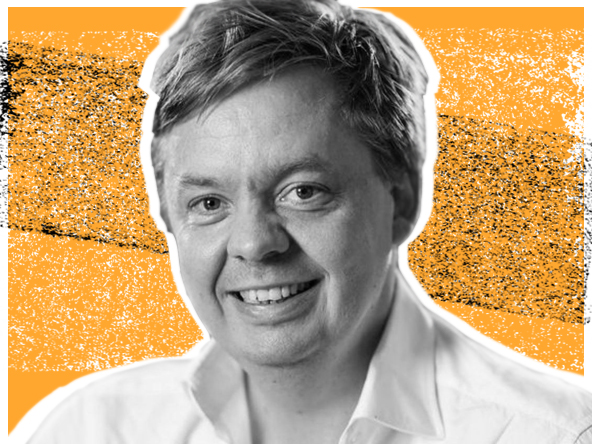
How I work: Ben Warner, co-founder, Electric Twin
What does a typical day look like for you?
I have a 10-week-old baby, so first call is looking after a little baby, making sure that she’s fed and trying to pass her over to her mum in clean clothes and not crying. We don’t track the success rate, but I wouldn’t say it’s 100% right now.
Then it’s into Electric Twin. I run the technical side of the business; each day differs quite a lot, depending on where we are in the big project cycles. At the start of projects, often the work is about trying to understand the users, thinking through how we can make sure that they get value. Later, towards the end of the project, it is much more around whether it is working as it’s meant to. Does this solve the user’s problem?
What is your style of working?
The person with the best information is the person closest to the customer. They really understand the technical details and what they’re trying to solve, and so my role is less around saying what the solution is, but more helping to make sure that the team understands the problem and then trying to think of the coherence across the organisation. Are we solving valuable problems? Does this actually solve the user problems?
We are lucky enough to have people who can see the bark from the trees, but my job is to look at the forest. What you always want to do is have the person who’s best in the organisation solving a problem. Then it’s just about trying to make sure that they’re set up for success and they can solve that problem.
What priorities and issues are keeping you busy?
Synthetic audiences are an additional tool in most cases, rather than a replacement, and so we’ve got to think about where the value is most provided by them and making sure that we’re allowing users to get to that value, so it allows them to make better decisions that gives them extra capacity. That’s what we should be aiming for, rather than ‘innovation theatre’ where [innovation] is a novel thing, but if it was removed, the person’s job wouldn’t change.
Where do you see the future of synthetic data going?
It’s a really exciting time as a group of people who are fundamentally trying to understand what’s going on in the world around them, which is a really hard task. If I want to find out if it’s raining outside, I can look out the window. If I want to find out if people care about an issue, I can’t just look out the window. [Synthetic data] gives us extra tools to be able to solve new problems that we previously hadn’t been able to solve before, whether that’s because of budget, time or scientific constraints.
Does it reflect the real world? The craft of research is to understand people, what they’re thinking and what they care about. The methodology is to enable us to do that.
It’s another tool. Imagine if a carpenter said to you, ‘Oh, I'm a hammock person’. It seems silly, but we sometimes get into these discussions. We’re all solving lots of hard problems, and for different problems, different tools are better. Social is a very powerful tool, but if you use it in the wrong way, it gives you the wrong answer. That is true for almost every tool that we’ve ever built, and these tools are no different.
Is AI something you use in your daily life?
I use AI for pretty much everything. Most people underestimate how powerful these AI tools are, especially if they don’t pay for them. It’s really quite scary to think this is the least powerful they’ll ever be. My recommendation for anyone who is hesitant about using them is to use them to help you when you are cooking. My cooking improved enormously because I suddenly have a bespoke coach next to me.
How do you manage work-life balance?
A startup is always hard. You always have to make choices about what you are and aren’t going to do. When we started, it was just me and my co-founder, so we had to do everything. Now Electric Twin is 20 people, we have to do a lot less, but that’s not to say that my day is suddenly empty.
What you find is that for the activities that actually matter, you find ways to prioritise, and you end up deprioritising the things that don’t actually matter as much. Most people do not have enough time in their day for everything they want to do. Everyone’s just making their choices every day.
What motivates you in your career?
When I started off, I wanted to be a professor in physics. I did 10 years in experimental physics, and the technique I used was called scanning tunneling microscopy. I wanted to learn more about AI so I could use that in my physics career. I started working on problems around human behaviour and discovered that I found them more interesting.
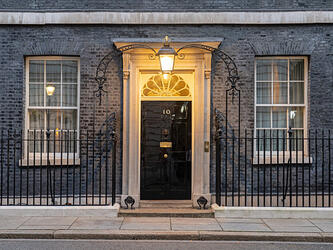
At Number 10, I really enjoyed solving hard problems, and hard problems which have a real impact. One of the really interesting things around understanding human behaviour is that when you manage to get these type of problems right, you have a massive impact on people’s lives. If you look at the big problems we have today – obesity, mental health, climate change – they’re all about understanding human behaviour.
For a lot of senior decision makers, Covid exposed the cracks that people like myself, who are advocates for data and technology, were talking [about]. I think that it was helpful in helping us to establish the Number 10 data science team and the innovation fellowships. I don’t know what my career in Number 10 would have been like had it not been for Covid, but in terms of the experience, it showed people the problems when maybe otherwise they would have wanted to prioritise other areas.
Are there any lessons you took from Downing Street into your current role?
The importance of speed. At times, as an analytical community, we can produce great work, but it takes eight weeks. If the decision’s already been made, however valuable that work was, it is no longer valuable. Therefore, that ability to be able to bring evidence and insight to the really key important moments is crucially important.
How do you think working practices in the industry are shifting?
I will put my hands up and say, as a non-market researcher, I should be careful not to say too much. I do think, though, that we can probably draw analogies to advertising. Advertising, with the rise of Facebook and Google, saw tremendous changes.
As we see AI come through, we will see more automation; that might drive more in-housing. A massive transformation that’s already occurred in the market research industry is the move of focus groups from in-person to online after Covid. In some ways, the industry is always in transition.
Do you have any preferences in how you like to work?
I’ve always been somebody who likes to go into the office. I like the energy it brings. I like the ability to have those quick conversations. Especially when you’re a startup trying to solve these complex problems, being able to sit down, chat to people and test ideas is incredibly valuable. As we evolve, it’s just continually thinking about what is the way that we can get the most talented employees. There are trade-offs, and we’re always looking to optimise those trade-offs.
Are you optimistic about the future?
You have to be an optimist if you’re going to start a startup. It’s a really exciting time to be in the industry. In some ways, everyone looks at these [AI] tools coming through as though it’s a bad thing. If you look at thermodynamics and quantum, that really kicked forward the industrial revolution. It’s so hard to model humans, and it’s so hard to collect data at scale, but new tools might allow us to unlock this, and then suddenly, we might have the equivalent of the industrial revolution for social science, for market research, for understanding customers.
Every decision should be made [based] on the customer. Every company believes that. As these [AI] tools come through, they’ll make market research more valuable. More companies will look to gain more data around understanding people because they can use it more – it impacts their decisions more. So, I actually think it’s a really optimistic time to be around research. It’s just that there will be a change within that, and that’s what I think causes people worry: it’s the change, rather than the final place.
This interview has been lightly edited for clarity.
The How I work series explores how research leaders manage work and life, lead teams and find inspiration.
We hope you enjoyed this article.
Research Live is published by MRS.
The Market Research Society (MRS) exists to promote and protect the research sector, showcasing how research delivers impact for businesses and government.
Members of MRS enjoy many benefits including tailoured policy guidance, discounts on training and conferences, and access to member-only content.
For example, there's an archive of winning case studies from over a decade of MRS Awards.
Find out more about the benefits of joining MRS here.
0 Comments