


What will become of young researchers in an AI world?
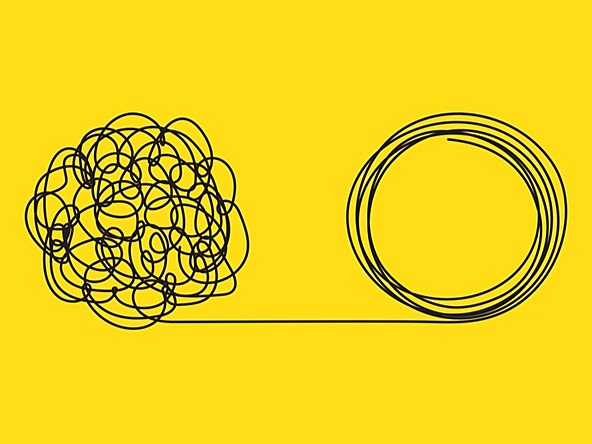
I recently heard that newcomers to the industry now need to think of themselves as ‘system engineers’. The phrase stuck with me. If that had been the headline in 2005 when I started working in research, I’m not sure it would have spoken to me. As research conferences increasingly feel like tech incubators, I’ve found myself wondering: would I choose this industry again if I wound the clock back 20 years?
AI is increasingly woven into the fabric of our lives and that’s no bad thing. In my household recently, it designed three World Book Day shoe boxes (don’t ask), suggested which plants I won’t kill this summer and inspired recipes from random leftovers. Its optimistic, confident, can-do tone is becoming more familiar by the day.
In research, we all know the narrative: the future is hybrid. It’s not AI versus human insight, but a marriage of the two, creating something greater than the sum of its parts. We increasingly hear that AI will elevate our role, creating space to become more senior advisors, to land insight with flair and stretch our critical thinking. What we’re not talking about enough, however, is the impact on the younger generation entering the industry.
We now expect new researchers to orchestrate projects by combining AI tools and human judgment in harmony. But that alone won’t achieve differentiation. Agencies are investing heavily in proprietary AI models to prove their credibility to clients. To do this, they must demonstrate ethical rigour, manage positivity bias and prevent systems from, quite frankly, making things up. In doing so, will building and managing these systems become the day-to-day reality of a junior researcher’s role, instead of observing a director moderate a lively group? Are we moving towards a world where training will be more about teaching AI how to be a better researcher, than doing and learning it yourself first hand?
I learned, like most researchers now in their forties, by doing, watching and listening to countless focus groups, depth interviews and online communities. Clients used to ask, “How do you approach analysis?” I’ve worked in five first-class agencies, and the answer never really changed. We locked ourselves in a room for a long time and came out when we had the answer. We debated, challenged, hypothesised and empathised. We covered flipcharts in scribbles that others might struggle to decipher. That’s how we learned to tell a story, and to distinguish between something that is merely ‘interesting’ and something that reflects a deeper, commercially relevant truth.
If younger researchers are becoming ‘system engineers’, investing time in holding AI to ethical account and training tools to be trusted, where is the space to sit in a room and wrestle with ambiguity together? This process isn’t fast or definitive. It’s open, nuanced, messy and deeply collaborative. It can be uncomfortable. But we emerge with a story we don’t just understand intellectually, we feel it.
AI undoubtedly accelerates this process and produces outputs at scale. We can all say that in our sleep by now. But in fast-tracking insight, are we losing the slow, subjective stage of thinking? The time spent at the edges, exploring nuance and marginal details? If that stage disappears, how do younger researchers develop the muscles and reflexes needed to elevate whatever AI produces (as we’re so often told we need to do)? The risk is that researchers become messengers of the systems they create and control, rather than interpreters of human experience.
The hybrid model relies on our role as researchers to be polarised. On the one hand, we are engineers; training AI and holding it to account to ensure we’re not dealing with AI moderators chatting to synthetic respondents going round in circles. On the other hand, we must be charismatic senior advisers, layering storytelling and strategic guidance on to AI driven outputs.
For experienced practitioners, this means adopting new tools and embracing change, but for younger researchers, it may mean losing some of the foundational experiences that build instinct and judgement. If the days of flipchart scribbling, story crafting and live debate are fading, we must replace them with a sustained and intentional approach to developing critical thinking in the next generation.
As a junior researcher, my deepest fear was that I wouldn’t hold people’s attention in debriefs, that my presentations would feel dull or forgettable. Driven by that fear, I prepared obsessively. I thought carefully about the stories, anecdotes and lived moments I could weave into presentations to help clients feel what we had experienced and feel memorable. I swear by it as a tool. It helped me in those early years when I hadn’t developed that muscle memory for linking a strategic insight to a customer experience. It gave me agency in my work and built my confidence as a presenter.
Two decades on, as we live through rapid innovation in research, I still believe that for insight to land, it has to be felt and for it to be felt, it has to be lived, at least in part. I have no doubt that my role in five years’ time will look different, and I’m excited to see how human insight is repositioned. I just hope that the stories and lived experiences are as easy for new researchers to reach for as they were for me.
It’s easy to feel overwhelmed by the endless list of AI tools we’re told we should be using. It’s hard not to hear the rising panic about shrinking budgets and constant AI chatter. But as every agency weaves AI into the research process, it becomes table stakes. It’s not AI that will set us apart, but how we translate the insight and its scale into feeling, empathy and instinct for our clients. If this is our true value, if this is how we as agencies set ourselves apart, we have to ensure as an industry we invest just as deliberately in this piece of the puzzle for the next generation.
Jude Terry is co-founder at Wren Insight

We hope you enjoyed this article.
Research Live is published by MRS.
The Market Research Society (MRS) exists to promote and protect the research sector, showcasing how research delivers impact for businesses and government.
Members of MRS enjoy many benefits including tailoured policy guidance, discounts on training and conferences, and access to member-only content.
For example, there's an archive of winning case studies from over a decade of MRS Awards.
Find out more about the benefits of joining MRS here.








2 Comments
Ros
7 months ago | 1 like
Great article Jude. How those starting out in work get to have the pivotal experiences that develop knowledge and skills is to me key as AI is increasingly pushed. This is layered on top of the working from home transition which cut out the day to day osmosis from being near to experienced professionals. We need to adapt and find the way to lift up the next generation.
Like Reply Report
Kelly McKnight
7 months ago | 1 like
Jude raises a legitimate concern, but one that assumes there is only one training ground. When scientists want to understand complex systems, they build models, run experiments and stress-test assumptions. We don't question their understanding of the natural world. The same logic applies here. Testing a synthetic persona against human reality, finding it wanting and understanding why - that’s not a shortcut. That’s a real craft. The entry-level researchers I work with at Verve do this every day. They’re not just operating systems, they’re learning where they break.
Like Reply Report