


The social media ban: Are we missing the bigger picture?
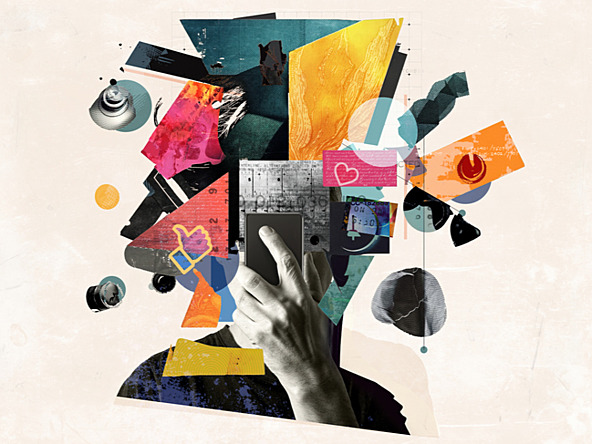
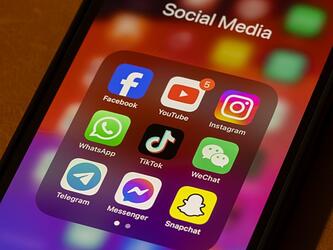
The UK's social media ban has been a curious example of the personal and the professional colliding on LinkedIn. Of course, these two sides to our lives often do come together on the platform, and I generally appreciate that balance: I don’t want to see people only through the lens of what they’re paid to do. I’m interested in the whole self and what each of us brings to our work from other areas of our lives. We’ve become more accustomed to showing up fully in work since Covid, and I really want to see that humanness retained.
But something’s been bugging me about the content I’ve seen on the social media ban. I’ve noticed that it’s not uncommon for people to draw a stance – and project that stance – based on a conflation of personal opinion and partial evidence.
We do believe that evidence matters in this sector, after all, and it’s a watch-out for us that we must preserve the muscle to gather evidence rigorously and think critically.
The starting point, I believe, is that we already have a tendency culturally to assume that certain parenting experiences are universal. I’ve worked on parenting brands for years, and I know how diverse parenting journeys can be. Plus if you, like me, have children who fall in any way outside the bell curve, your antennae are more attuned to the instinct we can have to pull from our own situation – and those of the families around us – and assume subconsciously that this represents a wider truth.
Of course, for the parent whose child struggles with compulsive tendencies in their use of social media, or who has been exposed to harms, there are valid concerns which must be respected. I never want to dismiss for one second the fact that there are cases of children who have had devastating experiences because of social media that have resulted in tragedies such as suicide. I also recognise that there are reasons any parent might question the validity of the ban and still welcome it – for some, it’s a compelling and fairly straightforward way to manage their kids’ tech use. The government says you can’t do it, so don’t do it.
I’ll also note here that I don’t want my own kids on social media, and even if they have a wide range of constructive screen-based hobbies, I always want to get them away from their computers and outside wherever I can. But I don’t think the evidence is there that screen use or social media use specifically are as damaging as the hype.
We already commonly conflated social media use with smartphone use, and it was typical to cite Jonathan Haidt’s book ‘The Anxious Generation’ as the singular reference that technology is a negative force responsible for children’s worsening mental health. Yet not everyone agrees. And I mean experts who bring nuance and data, and who challenge what can be a frothy debate.
Dr Lucy Foulkes, a psychologist specialising in adolescence at the University of Oxford, has argued persuasively that the emphasis on smartphones – and/or social media – is often an oversimplification of the factors influencing teens’ mental health1. Candice Odgers published a high-profile critical review of Haidt’s book in Nature, noting that the evidence for the claims Haidt makes is weak, and much of the data is correlative rather than causative2. Additionally, a 2024 US study found that peer relationships were the most meaningful contribution to adolescent mental health, and quality of social media use had little influence3.
Both Foulkes and Odgers make a compelling central point: when we over-simplify the factors affecting children’s mental health to focus only on social media and/or smartphone access, we lose sight of the importance of tackling other causes, which may in fact be more significant.
We might ask: what of the impact of living in poverty? It’s hard to find studies drawing any kind of meaningful comparison between social media use, poverty and mental health, but there is certainly a robust and long-established evidence base that poverty negatively affects mental health. As one example, a large-scale UK study from 2019 found that persistent poverty affects one in five children in the UK and that any exposure to poverty was associated with worse physical and mental health outcomes4. This is corroborated by multiple longitudinal studies in the UK and US. We might also wonder why the impact of Covid on children’s mental health longer-term is often totally absent from scrutiny.
So, the challenge comes – and the watch-out around our evidence-gathering skills – when we confidently draw conclusions from personal experience and project those with authority.
There are a few simple questions we might ask ourselves, such as: what does the evidence indicate, in the round? Further, what do we know – or can we reasonably anticipate – of the potential outcomes? And finally, if I communicate a view on this, is it drawn from my own experience, or the evidence?
If we return to questioning the ban, we might pause to acknowledge that the evidence is weak. It’s noteworthy that the main reference point we have – the Australian ban – has found little evidence of effectiveness, as an observational study found – more than 85% of adolescents continued to use social media5. A survey by the Molly Rose foundation backs this up, finding that three in five adolescents aged 12-15 continued to use social media despite the ban6.
We might also want to consider that in circumventing the ban, for example through using free VPNs, children might still be at risk of harm, with their parents possibly less able to track their behaviours. After all, if the focus is on a ban rather than regulation of social media companies’ content and algorithms, the risky content and opportunities for bullying will remain. Yes, the ban might accelerate efforts at regulating social media by giving the tech players a major stick that influences real change. But that doesn’t mean the ban itself is going to be effective.
Ultimately, we might want to think: with all this focus on social media, are we letting ourselves collectively off the hook in addressing the more significant proven factors that negatively affect adolescents’ mental health? I do personally believe this is the most important underlying issue in the focus on a social media ban.
One final statistic to leave you with: the Children’s Commissioner has just reported that over one million children in England – around one in ten – were referred to mental health services last year. This is a record-breaking high7.
Louise McLaren is managing director (London) at Lovebrands and a columnist for Research Live
Reference:
- https://www.theguardian.com/books/article/2024/jun/15/im-an-expert-on-adolescence-heres-why-a-smartphone-ban-isnt-the-answer-and-what-we-should-do-instead
- https://www.nature.com/articles/d41586-024-00902-2
- https://www.sciencedirect.com/science/article/pii/S1054139X24008255
- https://pmc.ncbi.nlm.nih.gov/articles/PMC6837248/
- https://www.bmj.com/content/393/bmj-2026-363695
- https://mollyrosefoundation.org/more-than-60-of-australian-children-still-using-social-media-despite-ban-for-under-16s-research-shows/
- https://www.childrenscommissioner.gov.uk/resource/childrens-and-young-peoples-mental-health-services-2024-25/

We hope you enjoyed this article.
Research Live is published by MRS.
The Market Research Society (MRS) exists to promote and protect the research sector, showcasing how research delivers impact for businesses and government.
Members of MRS enjoy many benefits including tailoured policy guidance, discounts on training and conferences, and access to member-only content.
For example, there's an archive of winning case studies from over a decade of MRS Awards.
Find out more about the benefits of joining MRS here.







0 Comments