


Dephi perspectives: AI agents don’t go to prison. Insight professionals carry the consequences

The market research industry is in the middle of a profound and uncomfortable transition. Generative AI, synthetic respondents and agentic insight systems are dramatically accelerating how research is generated, synthesised and consumed.
What once took weeks of fieldwork, analysis and debate can now be produced in hours. Concepts are ranked instantly, messaging is optimised in near-real time, and dashboards offer clean, confident answers that feel decisively “good enough”.
For organisations under constant pressure to move faster, this shift is seductive and in many respects genuinely valuable. But it is also quietly changing the role of research from a support function with time for considered judgement to part of the production line for decision-making.
Growing responsibility
Historically, market research informed decisions without owning them. Researchers provided evidence, context, texture and challenge, fully aware that leadership judgement sat downstream.
Today, AI-powered insight increasingly functions as a decision trigger rather than a decision input. Synthetic respondents rank concepts and price points. Large language models (LLMs) collapse thousands of verbatims into confident themes. Agentic systems recommend winners, losers and next actions.
In many organisations, these outputs flow directly into execution; creative selection, pricing changes, product roadmaps with minimal pause. Insight has moved closer to the point of action, and with that shift comes much higher consequence.
This is where “humans in the loop” is supposed to matter. In theory, keeping humans in the loop ensures that interpretation, scepticism and methodological discipline remain central, acting as a brake on automation when confidence outpaces understanding. In practice, however, human in the loop in market research often means little more than procedural oversight.
A researcher reviews the output. A slide deck is signed off. A human is technically involved. But involvement is not the same as control, and presence is not the same as judgement.
When AI systems generate plausible, polished narratives at speed, humans increasingly approve rather than interrogate. At its mildest, this dynamic erodes the craft of research. The work of insight has always involved friction: wrestling with conflicting signals, resisting the temptation to over-conclude, pressure-testing assumptions, and holding uncertainty long enough to understand what really matters.
When systems optimise for speed and clarity, that productive friction disappears. Researchers challenge less rigorously because “the model agrees.” They triangulate less because synthetic data looks consistent. Insight starts to sound right rather than be right. This isn’t a failure of capability; it is deskilling by design. Judgement, like any muscle, weakens when it is no longer exercised.
Owning risk
The more serious risk emerges when market research influences decisions with legal, ethical, or regulatory implications. Pricing fairness, healthcare communications, financial product positioning, sustainability claims, employment strategy; these are areas where insight increasingly carries real-world consequences.
If AI-generated or synthetic-heavy research is biased, incomplete, or misapplied, the downstream impact is no longer academic. When decisions are challenged, nobody asks the synthetic respondent to explain itself. Nobody cross-examines the model. Accountability does not sit with the algorithm. It sits with the insight professionals who signed off the work.
This creates a structural accountability asymmetry that the market research industry has not yet fully confronted. AI systems increasingly shape conclusions and recommendations, while humans increasingly own the consequences. Humans in the loop, when implemented superficially, becomes less a safeguard and more a liability trap.
Oversight that does not include real understanding, the ability to challenge and the authority to stop or slow decisions is not protection – it is exposure. If a researcher cannot clearly explain why an insight should be trusted, articulate its limits and defend its use under scrutiny, they were never meaningfully in the loop.
Speed needs scrutiny
Synthetic audiences sharpens this problem further. Used well, synthetic respondents are extraordinarily powerful for exploration, iteration and early hypothesis testing. They are excellent at ranking, screening and pattern discovery within known spaces. Like any other methods, used uncritically, they can create dangerous overconfidence.
Some synthetic systems tend to smooth away edge cases, cultural nuance and emotional complexity; precisely the details that often create real-world failure later. The risk is not that synthetic insight is fake, but that it becomes decision-grade without the proper critique and testing. When speed replaces scrutiny, ‘directionally right’ just accelerates uncertainty rather than reducing it.
This is where the industry’s tolerance for ‘80% right’ falls apart. We achieve 80% only through hard work, rigorous methodology and critical thinking, things that take time and craft.
Replacing this with a tool that is often wrong means a greater number of wrong decisions, not fewer. In an AI-accelerated world, decisions move faster, propagate further and compound risk more quickly. The cost of being wrong rises as decision velocity increases. Speed demands higher standards of rigour, not lower ones.
With power comes...
The truth is that market research is no longer just a support function. It increasingly sits on the critical path of decision-making. That means humans in the loop must evolve from a comforting phrase into professional safety infrastructure. It must mean clear separation between exploratory insight and decision-grade evidence. It must mean mandatory human interpretation, not just approval. It must mean explicit articulation of uncertainty, bias risk and limits – even when those slow things down.
These are not blockers to progress; they are what preserve credibility when insight is challenged.
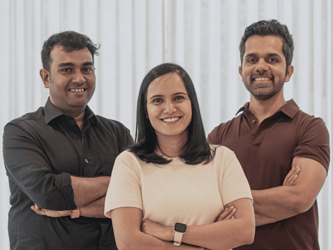
Eddie O'Brien is senior director, global customer insight & experience at Sage, and Dr Ben Warner is co-founder at Electric Twin.

We hope you enjoyed this article.
Research Live is published by MRS.
The Market Research Society (MRS) exists to promote and protect the research sector, showcasing how research delivers impact for businesses and government.
Members of MRS enjoy many benefits including tailoured policy guidance, discounts on training and conferences, and access to member-only content.
For example, there's an archive of winning case studies from over a decade of MRS Awards.
Find out more about the benefits of joining MRS here.









0 Comments