


48 teams, 104 matches, infinite screens: The World Cup shift
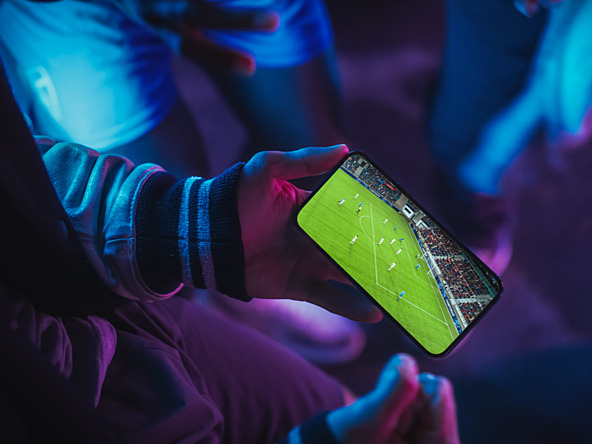
The World Cup starts today, with the usual excitement and anticipation felt across the globe. This time around, it is bigger than ever, with 48 teams and 104 matches (up from the usual 64 games).
The president of Fifa has already declared that every match will be like the Super Bowl, and World Cup frenzy is set to dominate many people’s lives over the next month.
As insight professionals it is fascinating to look at how consumption behaviours have changed around the tournament over the past few decades and try to predict what is likely to happen this year as TV viewing behaviour continues to change dramatically.
The fragmented fan experience and the death of the linear monopoly
"The World Cup arrives at a moment when the media landscape is more fragmented than ever. Audiences will continue to divide their attention across streaming platforms, social feeds, creator ecosystems and gaming environments, while traditional viewing habits become increasingly personalised and on-demand." (The One Off Media Agency)
This quote from The One Off Media Agency perfectly sums up the changing media landscape compared to previous editions of the tournament.
We are set to see record streaming and social media numbers in 2026 – significantly higher than the record numbers that we saw in Qatar in 2022.
Qatar 2022 saw an 12% decline in linear TV viewing compared to 2018. Much of this loss was driven by China and India, where streaming accounted for more than 50% of all viewing for the first time ever, and this trend is set to continue in 2026.
According to Global Web Index, 38% of adults said they streamed World Cup content in 2022, with this number increasing to 44% in 2026 when asked about likely consumption for this year’s tournament. As expected, this shift is much more marked in younger demographics with 48% of under-25s likely to stream content vs 37% of over-55s.
The dual-speed audience: core vs. casual
It is important to also differentiate between casual fans and core football fans as their behaviour also differs. The casual fans – who make up 56% of the World Cup audience – are still more likely to unify around a single screen (often the linear screen) as the World Cup is a shared experience and an opportunity to for a cultural moment.
In contrast, core football fans will behave differently – 54% are using multiple screens, tracking live stats and alternative comments from other fans. It is these core football fans who drove the record social media numbers in 2022. The final in Doha generated a 621% increase in social metrics compared to 2018, with Ofcom reporting that 42% of younger fans actively reacted to matches in real time, compared to just 16% of fans aged 55+.
Time zone friction: the catalyst for on-demand viewing
Fragmentation of this year’s event is likely to be hyper-accelerated in 2026 due to the tournament being spread across three countries and four different time zones.
This matters as billions of fans in Europe, Africa and Asia will face matches kicking off in the middle of the night or during work hours, which is likely to force even more on-demand consumption. Many fans (particularly the casual fans) won’t watch the linear content at 3am, but they will be more likely to consume YouTube highlight packages, TikTok clips and spoiler-free morning streams.
What media fragmentation means for brands – a new era of insights
The world is much more complex for marketers than ever. In the linear era, a brand was able to buy an expensive 30-second TV slot during half time and reach the entire nation. In 2026, a brand must split its budget across traditional TV, social media, streaming and other services, as TV only will no longer suffice to reach all demographics – particularly younger demographics who are more likely to stream more content than consume linear streams at this World Cup.
For those of us in the world of insight and research, this provides more complexities when it comes to measuring the impact of sport sponsorship on key brand metrics.
Ultimately, the World Cup 2026 is likely to prove that the shared global ‘monoculture’ is no longer a single TV screen in a living room. It is a decentralised, fluid network of apps, streams and creators.
For insights and research teams, the old, linear measurement playbooks are officially obsolete. Success in 2026 and beyond will belong to the brands and researchers who can synthesise these fragmented data streams to see the whole picture, mapping out a unified story across a beautifully chaotic media landscape.
Matt Roberts is managing director at Potentia Sports

We hope you enjoyed this article.
Research Live is published by MRS.
The Market Research Society (MRS) exists to promote and protect the research sector, showcasing how research delivers impact for businesses and government.
Members of MRS enjoy many benefits including tailoured policy guidance, discounts on training and conferences, and access to member-only content.
For example, there's an archive of winning case studies from over a decade of MRS Awards.
Find out more about the benefits of joining MRS here.








0 Comments