


Participatory research study aims to help NHS strategise

Published in BMC Health Services Research, the study combines participatory outputs with strategy tools to create a single process for planning.
The researchers developed the approach in response to the strategic planning challenges posed by medical and technological advances and constraints facing the NHS.
This study merges structured guiding questions, qualitative analysis and established strategy frameworks into one process, which could be used to offer a set of recommendations to inform policy, planning and implementation.
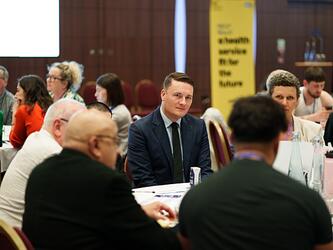
The research team tested their methodology at the NHS Grampian Research Conference last year, where participants took part in 14 parallel round table discussions, generating 148 written contributions.
Professor Seshadri Vasan, senior author and NHS Grampian’s R&D director said: “Using simple guiding questions, we were able to easily identify practical strengths, challenges and potential solutions from the round table discussions.
“The key strengths identified included telemedicine, interdisciplinary training and strong patient and public involvement. Challenges highlighted included fragmented data systems, referral tracking and workforce pressures.”
Possible solutions identified included AI‑based scheduling, remote monitoring, NHS caller identification, automated text reminders and multilingual patient information.
Professor Jules Griffin, director of the University of Aberdeen Rowett Institute said: “A critical challenge facing the NHS is how do we design engagement processes that are responsive, efficient and inclusive while remaining feasible in terms of money and time. Participatory approaches offer a way to integrate diverse stakeholder perspectives, from all over the community, under these constraints, generating strategies that are appropriate for patients and the public. This approach can also raise issues that haven’t been considered and if left unmanaged, could make a strategy fail.
“We believe this methodology could improve how we deliver health care despite all the other challenges we are facing.”
- Lee, M., Anderson, L.A., Piltonen, E. et al. Participatory development of innovation and implementation strategy – an action-oriented approach. BMC Health Serv Res ( 2026 ). https://doi.org/10.1186/s12913-026-14420-6

We hope you enjoyed this article.
Research Live is published by MRS.
The Market Research Society (MRS) exists to promote and protect the research sector, showcasing how research delivers impact for businesses and government.
Members of MRS enjoy many benefits including tailoured policy guidance, discounts on training and conferences, and access to member-only content.
For example, there's an archive of winning case studies from over a decade of MRS Awards.
Find out more about the benefits of joining MRS here.








0 Comments