


In sickness and in health: How public engagement informed the NHS 10-year plan
The opening ceremony of the 2012 London Olympics was notable for the prominent inclusion of a tribute to the National Health Service (NHS). The centrepiece of Clement Attlee’s post-war social reforms, the ceremony’s dancing nurses and patients underlined the central role the NHS plays in the modern British psyche.
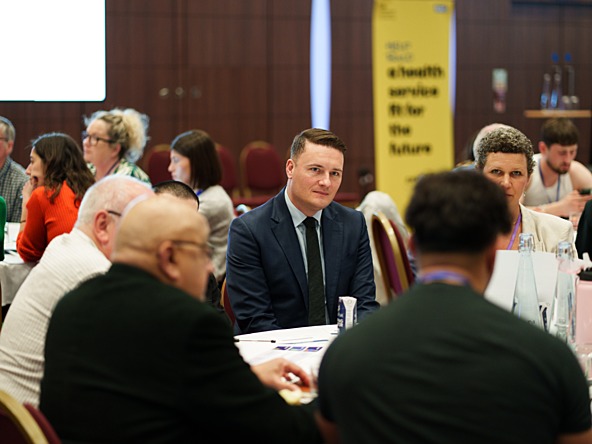
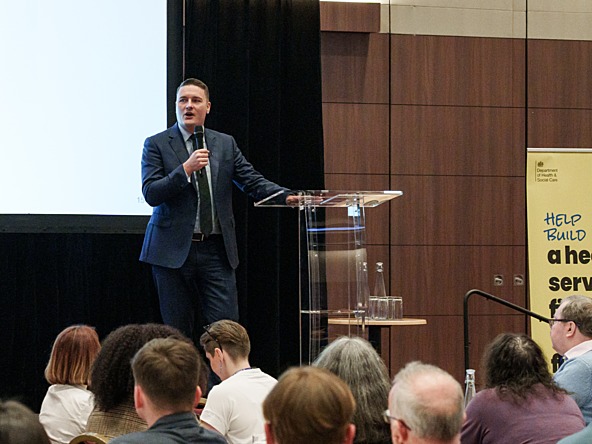
In recent years, however, there has been a consensus that significant reform is needed to ensure the NHS enters its 80th anniversary year in 2028 with optimism. Labour’s landslide victory in the 2024 election theoretically opened space for it to pursue necessary changes, and the health secretary, Wes Streeting (pictured) commissioned a new 10-year health plan for the NHS in England.
The plan, published in the summer of 2025, focused on three major shifts in how the NHS works: a greater focus on caring for patients in the community, using new technology to free up staff time, and prevention of illness through promoting healthy choices.
However, the secretary of state needed to make sure that other voices beyond the Westminster bubble were heard in the final strategy. Thinks Insight & Strategy was brought in to lead a consortium to carry out large-scale engagement with the public and health and care staff.
“When the new government came in after the general election, the health secretary was very keen to reset the relationship between the public and NHS staff,” says Toby Brown, who was head of the 10-year plan engagement work at the Department of Health and Social Care (DHSC). “He was very keen that if we were going to put together a 10-year health plan, it needed to be different from previous long-term plans. By that, he wanted it to go beyond the usual engagement with the sector, with stakeholder groups, with charities; he wanted it to go to people we didn’t normally hear from, whether that was the public, staff or really hard-to-reach voices.”

To bring the health secretary’s vision to life, Thinks Insight & Strategy sought to gather as many views from the public and staff as possible for the engagement insight report for the 10-year plan. The research team pursued several different avenues, including the creation of a Change NHS website which allowed any member of the public aged 16 or over, as well as healthcare industry organisations and NHS staff, to submit ideas for reforming the health service.
The public submitted more than 11,000 ideas for change and there were more than 100,000 responses to surveys about elements of the plan, with another 130,000 responses from campaign organisations. Overall, the Change NHS website received around 1.7m visits, after it began trending on social media.
“The response to the website and the launch was beyond what any of us had anticipated,” says Anastasia Knox, managing partner at Thinks Insight & Strategy. “It gave the programme energy and momentum and helped ensure its success.
“Obviously, it did come with challenges. The volume of data was enormous, both in terms of the qualitative data we received – people talking about their experiences at the NHS, for example, and the kind of depth and richness of those responses – but also the sheer volume of survey responses.
“To manage that, we used AI to analyse some of those responses, which was, I think, quite an innovative element of the programme, and it allowed us to digest and really meaningfully analyse those responses at a pace and at a price point that, frankly, just wouldn't have been achievable otherwise.”
Given the value of the data to future NHS policy, Thinks Insight & Strategy allowed the DHSC ongoing access to the data. The scale of the response to the website also underlined the value in pursuing the idea in the first place, argues Brown. “One thing that we did differently, and that was really from the secretary of state and special advisers, was they wanted there to be a public space on the website where people could share ideas,” he explains. “Obviously that did lead to social media traffic and some negative posts that needed to be dealt with. But they would argue, and I would agree, that it was completely worthwhile to generate the interest. The main objective was to hear from as many people as possible and reach people who would not normally go on a website like this and feed back.”
Building a forum
In addition to the website, the research involved face-to-face deliberative events with the public in each of the seven English NHS regions, with around 730 participants. Thinks recruited the attendees to be representative of the public by age, gender, ethnicity, education level and geography, with over-sampling of seldom heard groups, such as those with caring responsibilities, people living in deprived areas, frail and elderly individuals, and people from ethnic minority backgrounds. There was also a deliberative event with 27 children and young people aged seven to 18.
The research also included online and face-to-face deliberative events with around 3,700 health and care staff, recruited to represent a diverse mix of roles, specialities, pay bands and settings across English NHS regions. At a national summit, almost 300 members of the public and staff from across the country reconvened to discuss ideas for the 10-year health plan. Thinks also held an online drop-in summit for people who took part in the public deliberative events, but who could not attend the national event.
“We weren’t just going to seek the views of those who already knew that they were interested or already had an opinion.”
“There was a necessity to have an honest conversation and a conversation that is realistic about trade-offs,” says Lucy Farrow, managing director at Thinks Dialogue at Thinks Insight & Strategy. Political messaging had relayed in the weeks after the 2024 election that the NHS was ‘broken’, but for the team behind the 10-year plan, it was important to set out solutions to the issues in the health service.
The researchers adopted a deliberative research strategy to capture as many views as possible, with the aim of ensuring that the end strategy would be workable and make the difference that the public wanted to see in the NHS. “[Deliberative research is] important if what you’re trying to achieve is a sense of collective endeavour, a sense of being bought into something, not just ‘this works well for people because we’ve understood them really well and we’ve made the decisions’,” adds Farrow. “The plan would work well if people thought it was the right plan.”
A deliberative approach also allowed the researchers to bring together diverse groups of people who would not otherwise have heard each other’s views, opening up the opportunity for a different type of conversation, according to Knox.
Knox adds: “Some of the feedback was: ‘I’ve heard views I've never heard expressed before’, and ‘I’ve been challenged in ways I’d never thought I’d be challenged at a type of event like this’. It’s the deliberative process that allowed us to do that in a way that gave equal precedence to all voices and empowered people to talk. I don’t think if you just popped the same group of people in a focus group for 90 minutes, you would have had the same outcome.”
Community conversations
The final element of the research was a ‘workshop in a box’ model whereby Thinks provided training, materials and support to organisations to hold their own deliberative research.
In total, there were 658 events in communities across England with 17,601 people using the ‘workshop in a box’ materials. What impact did the findings have? “There are a few things that the findings really helped crystallise in the government’s mind,” says Brown. “One was the point around access being people’s top priority – access to GPs, access to dentistry.
“Sometimes in government, and maybe in other sectors, you want the glitz and glamour of new technology, but there was a real message of ‘fix the basics’ from the public and from staff.”
One example is the plan’s focus on a single patient record. In the deliberative research programme, a large proportion of people thought such a record already existed, where all medical staff could access a patient’s history. Of those that knew this was not already the case, Brown says the majority were supportive of a single patient record being introduced, which leant credibility to the policy’s inclusion in the 10-year plan.
Farrow adds: “What we often found is that there was a received wisdom around what the public would accept that really wasn’t borne out in the work that we did with the public. That is partly because we took this approach that we weren’t just going to seek the views of those who already knew that they were interested or already had an opinion.”
The level of engagement the research received in England was particularly revelatory, according to Farrow. “At its peak, about one in 60 people in England had interacted with the Change NHS programme,” she adds. “That’s one person in a reasonably sized school hall. That level of penetration of the population is really unusual.
“A lot of the interest [in the project] has been from people I’ve spoken to about the methodology of how you achieve that sense of collective buy-in to an engagement programme, and one that doesn’t descend into the opposition. It’s very easy to get a million letters saying how cross people are with something you propose, but getting that proportion of people to engage constructively with a question is quite different.”
The research has informed the final 10-year plan published by the government last year, helping to set out the public’s priorities to inform those eventually adopted by government. It has also created an example for future government policy development, showcasing the value of mass engagement and how research can help shape policies that are attuned to public opinion.
Photography by Thinks Insight & Strategy
- This research won the MRS award for public policy/social research at the 2025 MRS Awards. You can see a list of all winners by visiting the MRS Awards website.

We hope you enjoyed this article.
Research Live is published by MRS.
The Market Research Society (MRS) exists to promote and protect the research sector, showcasing how research delivers impact for businesses and government.
Members of MRS enjoy many benefits including tailoured policy guidance, discounts on training and conferences, and access to member-only content.
For example, there's an archive of winning case studies from over a decade of MRS Awards.
Find out more about the benefits of joining MRS here.









0 Comments