


Foresight can demonstrate value in an uncertain world, conference hears
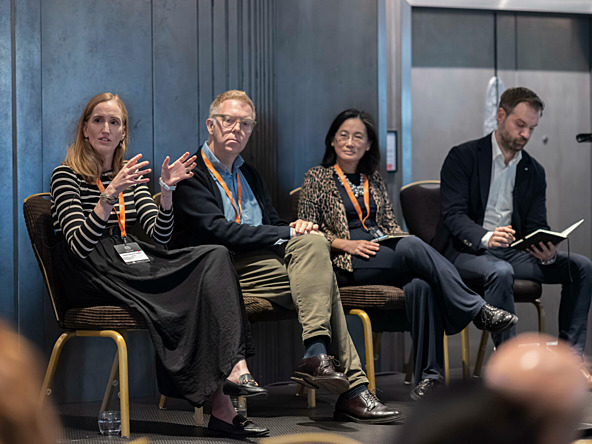
Speaking on a panel at the conference, which took place in London on Wednesday 14th October, Eulin Goh, former head of research and insight at British Airways, Joe Ballantyne, principal product manager at Future Agenda, and Edith Bardin, head of strategic foresight, corporate relations, at Shell, said foresight could be reframed for an age of uncertainty.
Bardin said that the uncertainty about the direction the world is going in also creates an antithetical situation where a harder environment to predict could help foresight gain a stronger voice within organisations.
“Insight seems to be quite stable as a profession; foresight seems to come and go as a profession that is needed or not by businesses,” she said.
“The world is so volatile and uncertain that there is an understanding [in businesses] that we need professions that can help us and give us more confidence in our choices, even if it feels more of a paradox to ourselves [as foresight practitioners], as our job is much harder these days, as the world is more volatile and things change every day.”
Bardin said that she had a dedicated strategic foresight function at Shell, adding her focus was often on “trying to help people think a little bit further than three to six months down the line”.
“The culture shift is an important part of the journey,” she added.
“We have to take everyone on different journeys depending on where their starting point is.”
Current challenges in foresight, according to Bardin, included how to build a clearer understanding of what foresight is, how to prove foresight’s value and demonstrating what activities came out of foresight work. She also called for more evidence and studies to demonstrate the discipline’s commercial value.
Goh said that that “the pace of work is just so fast now, and the world is changing so quickly, and businesses are expecting teams to help support decision making”, adding that volatility is a “real opportunity” for foresight and can be a “Trojan horse” for the discipline.
“It has to be woven quite carefully into the story of customer satisfaction,” Goh added. “It is about having that outside-in view. Organisations are currently inwardly focused, and they are looking to teams to help them.”
Goh recommended foresight practitioners to “never waste a crisis”, highlighting how major world events, such as Covid-19, provided opportunities to underline the value of foresight in helping organisations navigate global turmoil. “Think about how you can leverage what is happening now to your advantage,” she said.
Organisations need to have big goals to help them to take risks and focus on longer-term issues as well as short term problems. “Culture is so important, and it should come from the leadership team,” Goh added.
Ballantyne told the panel that one way to gain buy-in within organisations was to demonstrate how foresight could be a practical and useful addition to their work. “One of the things that I’ve found working client side was to find processes that organisations were already doing where foresight could add some additional value instead of adding a new process on top of everybody else’s.”
One problem was that foresight functions were often split between different teams, he added. “There is something about how I find the people who have the space, time and licence to do this kind of work,” he said.
“Because foresight is relatively new discipline, there probably won’t be an EVP of foresight, probably. You will need to find the right people in the organisation who are willing to do this sport of work, and that takes some time.”
Arguing that “in some ways, foresight has operated too much at the level of uncertainty”, Ballantyne said that the discipline needed to show it can advise on decisions that organisations take and take a stance on what scenarios are most plausible in the future.
On AI, Ballantyne said that it is a “great opportunity, if it is played right”, but warned against outputs that are “too slick” and therefore negate the need for difficult, strategic conversations, and “an assumption of completeness” from AI-generated reports. Misinformation also meant the need for human verification of data would be crucial, he added.
Photo credit: Will Amlot

We hope you enjoyed this article.
Research Live is published by MRS.
The Market Research Society (MRS) exists to promote and protect the research sector, showcasing how research delivers impact for businesses and government.
Members of MRS enjoy many benefits including tailoured policy guidance, discounts on training and conferences, and access to member-only content.
For example, there's an archive of winning case studies from over a decade of MRS Awards.
Find out more about the benefits of joining MRS here.







0 Comments