


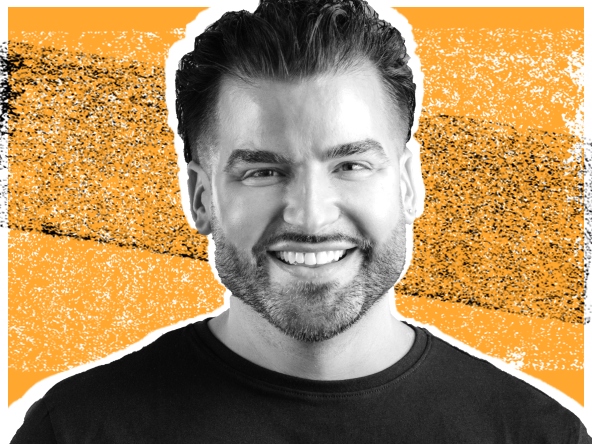
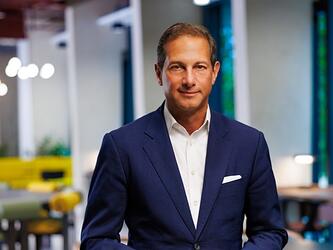
How I work: Joshua Nu'u Steele, co-founder and CRO at Ideally
What does a typical day look like for you?
Managing the Asia-Pacific business out of New York means my days are roughly split in two: early starts here with the team, do all of the US work and then be on calls later in the evening.
I like to stay close to our customers where possible and keep an ear to the ground.
What attracted you to what you do?
I get a lot of my mindset from my dad. He was an entrepreneur. He hustled his whole life, but never quite made it. He was always chasing the next thing, but was never able to get it. We lost him just over 10 years ago, and that really lit a fire in me. I was, up until that point, really driven by growing through the corporate ladder.
If I think of my first manager, she took a punt on me when I was 20, with no experience, straight out of university. She saw something and she was probably one of the hardest managers I’ve had in my career, but I credit her with all of the soft skills that come around working with people. That’s led into who I am as a leader now.
I guess I wanted to personally never be in the position that my family was and, especially since losing my father, wanted to make him proud. I started with Booking.com, grew there and then I moved over to SaaS [software-as-a-service]. I really cut my teeth in the SaaS world, which is so different to a larger organisation. You’re focused on so many different elements and you have to think so laterally and creatively. I ended up leading international expansion into the US and UK, and then through friends, I found this other opportunity to build something great to disrupt a space. And here I am: co-founder, Ideally.
Research has always been robust and practitioners know what they’re doing, but the reality of a lot of businesses is they couldn’t afford research earlier. What really drove me was my time at Booking.com; I uncovered within myself a way to connect with people and to bring out creative solutions for growth. That linked really nicely to ‘if we had the ability to help marketers and insights leaders bring research in more, what would that unlock?’
How has working in different countries informed your career?
The advantage, personally, in coming here [to the US] is I’m pushed to think even bigger than I was originally because the competitive landscape is more mature, and there’s more people. On the inverse, getting to share with Australia and New Zealand what we’re seeing over here means lifting up the tide of the team and also clients back in ANZ, because typically trends start here in the US and then they move over to the other side of the world.
Coming from New Zealand and being a New Zealand business, we show up like who we are. We show up real. There is an element of humility, I think, because we always have to earn our place on the world stage, but I think that serves for authentic relationships.
In ANZ, or parts of Asia-Pacific, people wear many hats, they do a lot of different roles within one role. That’s not to say that’s not the case in the US, but because of the population, there are more people, and so there are more roles within an organisation to look after specific parts. What I had to learn relatively quickly was the challenges of those specific roles versus an individual that looked after five different areas.
What is your style of working?
If you’re familiar with Patrick Lencioni, the author of The Five Dysfunctions of a Team, the main thing that stuck with me was vulnerability-based trust. I come back to that point of, as a Kiwi, how we show up, but I also want to ensure that continues through the business as we grow globally. I hold a high bar with the team, but I ensure it comes with high care, and that comes from holding myself to that standard. I can’t ask people to push harder if I’m not.
Everybody has so much going on in their own life, and so, a practical thing we do every morning as a team is we do a stand-up. Part of that is ranking how are you feeling out of 10. You’re not allowed to be a seven because a seven is on the fence. By creating vulnerability-based trust, people that are having a bad day show up as a four and they truly share why they’re a four.
What I love is not that I need to jump in and ask how I can support, but the rest of the team do. You have to drop the ego. You need to show up authentic. If you’re truly pushing stuff uphill and you put on a mask or a front, that’s going to crumble and you’re not going to get the success that you need.
When I was going through the discovery of my ADHD, I decided to share that with the team. There were the thoughts in the back of my mind of ‘not everybody understands the intricacies’, or ‘will that put a brand or a label on me?’ But that doesn’t matter. I want them to know that I’m learning how my brain operates and how I show up as best as possible.
I uncovered quite a large portion of my team also had ADHD. That’s an example of [what happens] when you make people feel safe and they show their true selves. Instead of what you typically see in a startup or a scale up – pushing as hard as you can until burnout – it’s like, no, close the laptop, my brain’s not working the way it should for this particular task so I will come back to that and do something that I get a dopamine hit from.
How does ADHD influence your leadership style?
I was only diagnosed last year and it gave me a language for my brain, so it gave me an understanding of how it works. There are days where I can sit in front of my screen and almost feel a paralysis because I don’t know what to do with a particular project.
It’s helped me know the early signals and triggers. People with ADHD have constant noise. Part of, I think, why I’ve leaned into vulnerability as a leader is self-reflection is very frequent for me, going through the situations line by line in my mind, so I actually think it’s become my superpower [now] that I understand it so much more.
Do you have any advice for anybody with neurodivergence in the workplace?
If it’s not an official diagnosis, lean in and learn. Have an assessment, see what it really is because that knowledge is truly power, and then go from there. Once you know what part of neurodiversity you have, research and also speak to others who have it.
How do you achieve work-life balance?
Work-life balance is such an interesting term. The time zones are hard at the moment for us and the size of business that we are.
There’s a couple of things I do. I don’t skip the gym; for me it’s a place I exert stress, frustration, push my body to a point where my brain is actually off and I’m just feeling the pain. But also, in those moments that I know that my brain is not working, and I give myself permission to stop.
How do you use AI?
A couple of months ago I had a moment of reflection that we’re all talking about how AI makes your life easier, but actually, it adds such a large cognitive load when you are learning new tools, setting up new workflows and finding how you implement it within your day.
How I use it now is to set up my day. I know that in the morning, I’m going to wake up to internal Slack messages from Asia-Pacific and a whole lot of emails. I know that if I dive straight in, that’ll throw my day. I’ve set up my agents to prioritise my agenda, and it automates all of the drafts for those emails and Slack messages.
I’ve used Claude for quite a long time now, and it knows my thinking. I use it in a way to set up my day to remove the noise first and foremost. Now, it doesn’t mean that it’s doing everything for me. I’m still sense checking, but it just takes the workload of the starting point away. What I’ve really enjoyed using AI for is training myself. I love to learn new things.
How you see the industry developing in the future?
I think ultimately people are always going to continue to be important. Where I see [AI] being most effective is through the analysis and the work that would traditionally be done manually. Strategic research leaders get space to apply their knowledge, their experience and their company context.
The amount of time that AI saves on the things that would be done manually, I truly believe frees up this sector.
Are you optimistic for the future?
You can’t be in a scale-up and not be optimistic, but I mean that in all seriousness. I think without optimism, we won’t unlock the next way of doing things.
This interview has been lightly edited for clarity.
The How I work series explores how research leaders manage work and life, lead teams and find inspiration.
We hope you enjoyed this article.
Research Live is published by MRS.
The Market Research Society (MRS) exists to promote and protect the research sector, showcasing how research delivers impact for businesses and government.
Members of MRS enjoy many benefits including tailoured policy guidance, discounts on training and conferences, and access to member-only content.
For example, there's an archive of winning case studies from over a decade of MRS Awards.
Find out more about the benefits of joining MRS here.


0 Comments