


Jon Ronson: ‘You don't want to just demonise somebody. You want to try to understand’
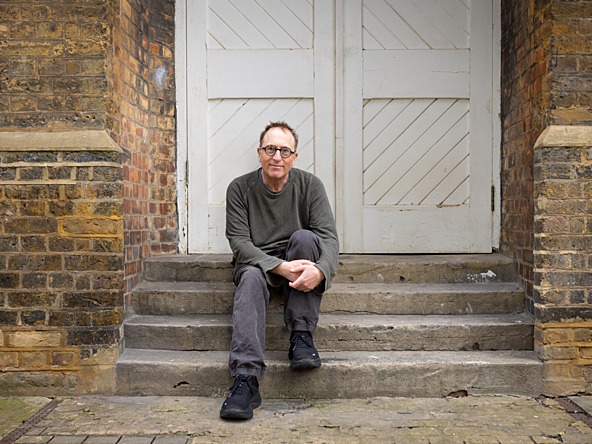
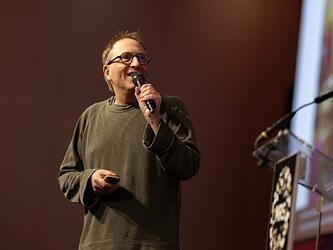
Jon Ronson’s career has taken him to extraordinary places. From meeting with extremists who believed a conspiracy theory that the world is led by a ‘shadowy cabal’, to covering a secretive paranormal unit within the US military, his work showcases the strangeness of human belief and behaviour – both at the edges of the cultural mainstream and at the heart of power.
When we meet ahead of his keynote session at this year’s MRS Annual Conference, I want to get a sense of what sparked his interest in uncovering these stories.
“I grew up in Cardiff in the suburbs – and I had a bad time,” he says. “I always remember Caitlin Moran saying to me that the reason I do this stuff is because I want to understand why people behave in such weird ways because I was, sort of, subjected to that. So, maybe there’s some truth there. But really, if that’s true, then it was kind of subconscious.”
More consciously, Ronson recalls that after moving to Manchester in the late 1980s, he watched documentary-maker Nick Broomfield’s 1991 documentary about trying to get an interview with South African Afrikaner nationalist and white supremacist Eugene Terreblanche [The Leader, his Driver and the Driver’s Wife].
“There was something to do with … the comedy of Nick bumbling around, trying to get an interview… and nobody had ever done it before,” says Ronson. “Now, you see it quite often – with me and Louis [Theroux] and so on – but Nick was the first person to do it. I thought there was just something so cheeky about people like us messing around with people like them.
“There was something so audacious and funny and cheeky about it. I just fell in love with the idea.”
Ronson says the “Cardiff high school version of it” is about him trying to understand “why people behave in the baffling ways they do”. He adds: “And the Nick Broomfield version of it is wanting to prick at their pomposities.”
Humour is central to what he does – he always hopes to find something funny, “however dark it is”. “If there’s a joke to be found, I'm quite unashamed about finding it.”
Empathy and understanding
While his work naturally deals with hearing from those with some questionable and often harmful views, Ronson takes an empathetic approach, and comes across as someone genuinely concerned about being thoughtful towards others.
In our interview, Ronson stresses the importance of what he terms ‘empathetic objectivity’. Society has changed a lot in recent years and what were once considered extreme positions have become more mainstream. I ask if researchers, who have historically prized pure objectivity, need to change approach in this context.
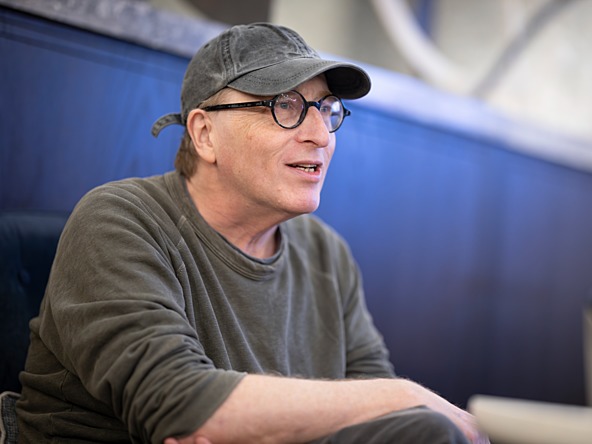
“I really don't like it when journalists are sort of ideologues or politicists, so objectivity, I think, is really important,” he says. “But I suppose what you're looking for is empathetic objectivity without falling down the rabbit hole yourself,” he says. “It’s understanding why somebody acts that way, but without you becoming that person.”
Ronson has been criticised at times for his approach, but says that he is trying to understand people in the societal context they are in. “You don't want to just demonise somebody. You want to try to understand. People get annoyed with me sometimes when I do that, because it’s always like I'm like excusing people’s behaviour, which I'm not. I'm just trying to put people’s abhorrent behaviour in a wider context. Why do you feel that way, why are they acting that way?”
Ronson had his own first-hand experience of not being understood recently, when he developed a blood clot in his leg after contracting Covid for the first time about a year ago. He tells me: “I ended up getting a blood clot and nearly dying. When I was in the hospital, they said: ‘why do you think you've got this blood clot?’ I said, ‘Well, I've got Covid for the first time, and the two things must be connected. It can’t be a coincidence.’ And they started treating me like I was a conspiracy theorist.”
Months later, he mentioned it again in a follow-up appointment, and the medical professional there agreed that there is a lot of research linking Covid with blood clots. But the initial hospital experience had already made Ronson see how easily people could be brushed off. He says: “In that moment, when these doctors were all being really condescending towards me, I did think ‘I get why some people are suspicious, if that’s the way that the doctors act.’ And my situation shows that, actually, the scientific community can jump to conclusions.”
“I'm not trying to excuse people. I'm just trying to put people’s abhorrent behaviour in a wider context.”
He says the publication of the Epstein files offered an “insight into how power works and how different people communicate with each other”, and adds: “Scepticism about power is always good, but then you get measles outbreaks, so that’s the downside of it.”
In So You’ve Been Publicly Shamed, Ronson wrote about the phenomenon of social media humiliation years before ‘culture wars’ entered the mainstream lexicon. A decade on, he says there has been a “huge shift” in power dynamics: “When the book came out, the people abusing their power tended to be – not always – more on the left, whereas now the people abusing their power are very much on the right.”
While there are still notable public shamings – he cites the couple at the Coldplay concert, for example – Ronson says: “For good and for ill, it happens a lot less because there is a lot more pushback.”
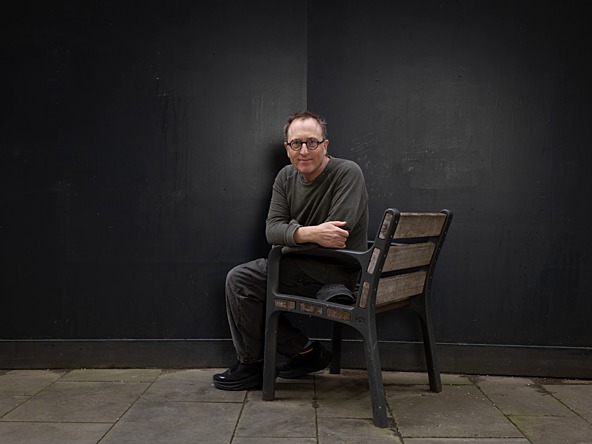
He feels there has been a “flattening” of what and who is being shamed. Whereas before, people were being “disproportionately punished” for badly-worded misconstrued jokes, the stakes are now higher, yet there are no consequences. Ronson says: “Now, you've got people whose crimes are really big and they're getting no punishment at all.
“I think the pushback is good if the shaming was unjust and the pushback is bad if the shaming is just.”
From fringe to mainstream
With some extreme views such as conspiracy theories going mainstream – or at least becoming broadly known about – Ronson feels this has had an impact on how he works. “I had the element of surprise back in the day. I was telling people things they didn't know – the relationship between conspiracies and extremism, and so on.
“It becomes a little bit more challenging for me because things I was uncovering are now so mainstream that you lose the element of surprise. So, it makes my job a bit harder.”
It also makes it harder to find stories. “Now that everybody’s talking about conspiracies, you know, that’s kind of annoying to me – everybody’s thinking about it,” says Ronson.
Ronson is conflicted on whether we are seeing a mainstreaming of misogyny currently. His new book, The Castle, out later this year, “veers slightly into the manosphere”, he says. However, he has mixed feelings about the manosphere’s relevance.
“On the one hand, yes, the Trump presidency is very much prodding at those manosphere type influencers. So, there’s definitely a mainstreaming of that, and just look at the way the ICE is behaving in Minneapolis, and so on.
“But at the same time, the manosphere still feels a little bit like a sideshow to me.
“Maybe there’s all of this focus on something that’s always been there and there’s always been a little bit of a sideshow… but on the other hand, it is seeping into the mainstream a lot more than I ever thought it would in terms of Trump pandering to the Andrew Tates and them pandering to him, and so on.”
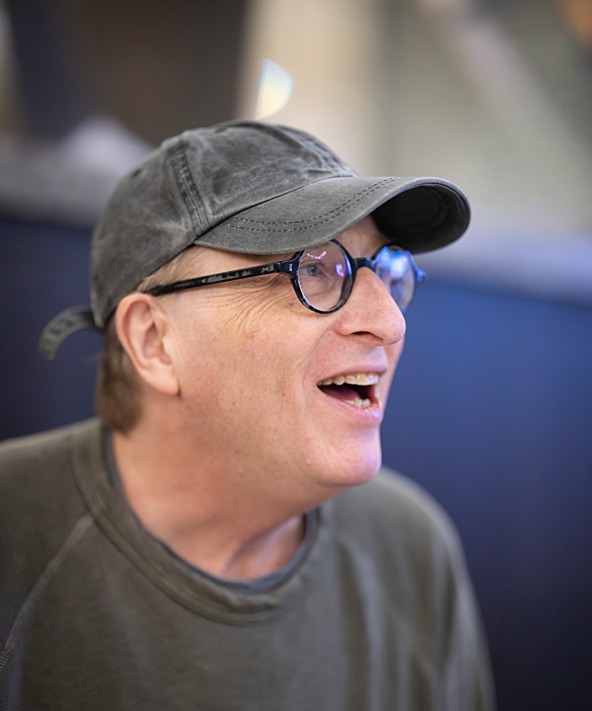
Ronson’s Things Fell Apart Radio 4 podcast began airing in 2021 – a collection of origin stories unpicking the so-called culture wars, including how an urban planning concept from Oxfordshire became tangled into a fringe conspiracy theory about controlling people’s movements.
How does he now find new stories, typically? “It’s not easy. You're just constantly looking for that ‘I didn't expect that. That’s mysterious. That’s something I would like to explore that I don't understand.”
“The older you get and the more stories you do, the harder it gets because for me, it’s about trying to understand something I don't understand. So, the more paths I go down to learn about things, the fewer things there are for me to understand.
“It always feels like a miracle when you fall in love with the story – and there is no real formula for finding it. I wish there was a formula – a place I could go to find them.
“Sarah [Shebbeare], my BBC producer on Things Fell Apart, said ‘you're looking for stories when you don't even know you're looking for stories’.”
Sometimes, he is just paying attention. At a live recording of the podcast at the Hay book festival in 2024, Ronson discussed how he came across the term ‘excited delirium’ in a book about George Floyd’s murder – a term he had not heard before, and which led him to cover the backstory of a fabricated medical condition later used in a legal defence in the case.
ForThe Castle, the story came to him. “My son was lured into a skeevy situation, and then I followed in his footsteps.”
Overall, Ronson copes well with dealing with dark topics. “Most of the time, I’m completely fine with it because I get so excited about being on a story that the excitement of piecing together a story or going to places where you're not supposed to go… all of those things are more powerful than the fear of it going wrong.”
However, there were some occasions in the new book where “things get a bit hairy,” says Ronson. But he adds: “Ultimately, there are lots of professions where people get into hazardous areas. Ultimately, it is part of the job.”
Ronson is in London for the MRS keynote; he lives in upstate New York. For fun, he runs every day and enjoys long hikes while listening to celebrity memoirs that allow him to switch off – he’s just finished Cher’s and is now on Elton John’s. “It’s turning out to be very good – funny and bitchy; just what you'd want from Elton John.”
He says that he sometimes quotes Louis Theroux, who, a while ago, was asked why he did this work. “His answer was that ‘not doing it is worse’,” says Ronson, adding: “Not long ago, I mentioned that to Louis – I said, ‘Oh, I sometimes I quote you.’ And he said he couldn't remember saying it and he didn't know what he meant by it.
“But what I think it means is, a story that isn't told is such a sad thing, that it’s worth putting yourself in a bit of danger to bring something into the world.”
Photography by Will Amlot for Research Live

We hope you enjoyed this article.
Research Live is published by MRS.
The Market Research Society (MRS) exists to promote and protect the research sector, showcasing how research delivers impact for businesses and government.
Members of MRS enjoy many benefits including tailoured policy guidance, discounts on training and conferences, and access to member-only content.
For example, there's an archive of winning case studies from over a decade of MRS Awards.
Find out more about the benefits of joining MRS here.







0 Comments