


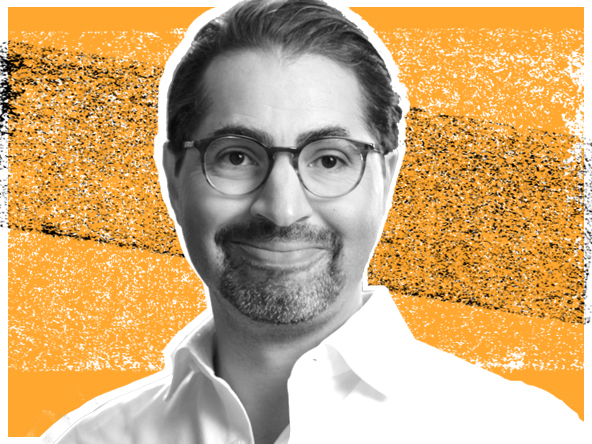
How I work: Thor Olof Philogène, CEO and founder, Stravito
What does a typical day look like for you?
A typical day is a balance between thinking and what I would call ‘human-to-human interactions’. That could be team members, board members or advisers. I try to stay close to the product and the details of what we’re building; as a founder, you cannot really run the company purely through layers of management, you need to understand what’s actually happening with the product.
I try to structure my months so they include time with customers and partners in person, as I believe that those conversations give me that first-hand perspective on how the product is actually used and what problems actually matter.
What are the priorities and issues that are keeping you busy at the moment?
I spend a lot of time thinking about timing. What do I mean by that? I think that many of the big shifts in technology are not questions of if they will happen, but when. Generative AI is a really good example: I think most of us can probably see clearly that it’s going to have a massive impact, but the difficult question is understanding what needs to happen right now versus what will take longer to unfold. The reality is that change rarely happens as quickly as people expect.
Also, I’m always busy thinking about what Paul Graham, one of the founders at Y Combinator, described as ‘founder mode’. It’s the idea that when you scale a company, it does not mean that you become a distant manager. Founders need to stay close to the business, to the product, to the people, and the real skill is knowing where my involvement adds leverage and where the team should just run independently. Should I get more involved or should I actually take a step back?
What motivates you in your career?
As an entrepreneur, you’re a builder. What motivates me the most is the opportunity to build something that truly matters. Starting a company is almost like having a creative canvas, but the big difference is you dedicate several years of your life to it.
We’re going through a period of history where knowledge work itself is being redefined, and I actually believe people will look back at this period in history because of how dramatically work shifted or changed. One of the reasons I believe that this shift matters so much is that big organisations still make a bunch of decisions, major decisions, without using intelligence they already have, already own, or things they already know. The knowledge exists, the research exists, but it’s trapped. Solving that problem is actually quite motivating.
The other big source of motivation is the opportunity to work with exceptional people. One of my daughters has had a career day, and they had a person that came and spoke about entrepreneurship at her school. Then she asked me about entrepreneurship. I told her building a company is a continuous learning journey, and you get to work with really talented people. A day that I find energising is a day that I feel that I learned something.
Do you prefer to work from home or from the office?
I fundamentally enjoy people, and I strongly believe that humans benefit from interacting with each other in person. At the same time, the reality is that we’re a global company. We have people working in multiple countries. We have a leadership team spread across continents. Inevitably, there will be calls and there will be remote collaboration.
In terms of working from home or at the office, it’s a balance. Some days I am at the office and there I focus on the human-to-human, people-to-people, face-to-face interaction. On other days I stay at home, and that’s when I know I’m going to speak to folks in the US or partners that are in different countries.
In terms of my style of working, I would say I try to get us as an organisation to continuously learn. How can we do what we’re doing even better next time? A large part is making sure that we are set up to learn at an organisational level, but it’s also about the human side, where I try to spend a lot of time understanding what genuinely motivates people. I would say that, in many cases, people’s ability to perform a task is not limited by their intelligence or their capability, but by the desire to do that particular thing. When people are intrinsically motivated, they perform.
What do you see as the core benefits of having in-person meetings?
A lot of cues and communication are non-verbal, and you can communicate without being able to speak a common language. I believe that as humans, we’ve grown up to learn to communicate and pick up cues in a non-verbal [way] as well as verbal. What in-person also allows you to do is to understand the reality of the customer much better. What’s the vibe of the company? What’s the culture of the company? What is it that is important? What is it that they display? What is it that they show me? All those things are important.
At the end of the day, our success is long-term tied to our customer’s success, so it’s better I understand their reality. You often get more time when you’re in person, and you also get the ability to speak to people you would never get to otherwise.
What motivates you outside of work?
I draw a lot of inspiration from my family; they’re a huge source of energy. I have two daughters, and they ask me a lot of questions, and those questions offer a lot of perspective for me.
On an individual level, I enjoy sports, especially tennis; I think it’s a great sport because it’s both competitive and social. Beyond that, I’m a very curious person – I’m very interested in technology more generally, but all the way to astronomy, learning about space, the planets. You realise how small you are; it’s just this very humbling field of research that is just so complex and fascinating.
How do you achieve work-life balance?
It’s a balance that evolves over time. I think my big learning from my own career is that what matters the most is being intentional about how I spend my energy and make sure that whatever time I dedicate to work or life outside of work needs to be meaningful.
Do you have any tips for managing workloads?
The most important principle is to be deliberate. Make sure you consciously choose how much time and energy you invest rather than gradually drift into working more than you intended.
The reality is that entrepreneurship involves real trade-offs, and it’s very easy to underestimate the sacrifices you will make if you’re not really careful about being intentional. During my first startup, I did not manage that balance well. It took me several years afterwards to fully recover, and that was quite painful. That experience reinforced how important it is to be deliberate about the workload you take on.
Do you use AI in your daily life?
I use AI frequently. I use it primarily as a tool to stimulate thinking. What I think AI does is it allows you to iterate intellectually much faster, so you can test your ideas, you can challenge your assumptions, you can explore different angles much more quickly than you could before. At the same time, I actually think it’s important not to fall into the trap of letting AI substitute your own thinking, but it’s a great sparring partner.
I remember listening to an interview with Yann LeCun, former chief AI scientist at Meta, on French media, and he was asked what advice he would give to kids. One of the things he said was to make sure to learn how to think. Learning how to think is even more important now than ever because the AI is going to be capable of doing so much in the future, so the question is what questions will you ask [the AI]? What should it do? That’s not something you should ever outsource.
What advice would you give to a young person entering the industry today?
I would say be curious. What I mean by that is to spend time learning from people who know the industry well, try to understand not just what they do, but why they do it and why they believe what they believe.
We’re living through a period where many ways of working are being reinvented, so it becomes very tempting to dismiss the existing practices very quickly. The idea of Chesterton’s Fence is a really good principle to remember – before you remove something, make sure you understand why it was put there. Why did they put the fence there? I think that’s especially true for young, ambitious people who don’t believe that the old folks understand the new technology. Curiosity combined with respect for hard-earned lessons is one of the fastest ways to learn.
This interview has been lightly edited for clarity.
The How I work series explores how research leaders manage work and life, lead teams, and find inspiration.

We hope you enjoyed this article.
Research Live is published by MRS.
The Market Research Society (MRS) exists to promote and protect the research sector, showcasing how research delivers impact for businesses and government.
Members of MRS enjoy many benefits including tailoured policy guidance, discounts on training and conferences, and access to member-only content.
For example, there's an archive of winning case studies from over a decade of MRS Awards.
Find out more about the benefits of joining MRS here.




0 Comments