


A new lens: How AI personas helped Ipsos understand the 2024 election
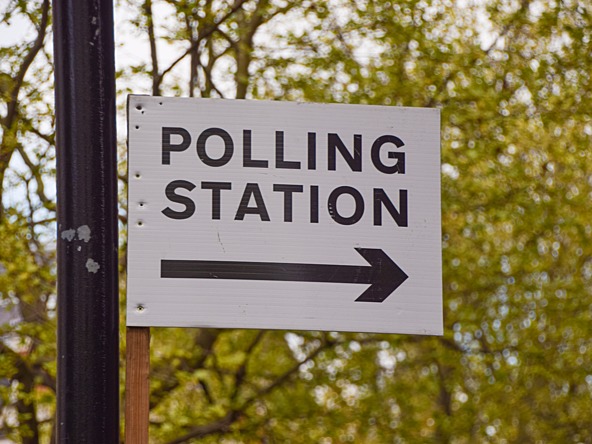
When a rain-soaked Rishi Sunak announced there would a general election in the summer of 2024, there was significant surprise. The Conservative Party was behind Labour in the polls, and seemingly on course for a historic defeat, but an election had been expected in the autumn, before the January 2025 legal deadline. The relative short notice of the decision to call a summer election meant there was little time for polling companies to put their plans into action to address how they would track the six weeks leading up to the ballot box.
The election, which eventually saw a Labour landslide, promised a large turnover in seats as well as the end of 14 years of Conservative rule. However, it also came during a moment of profound technological change in the market research sector, with AI personas one of the emerging technologies to gain momentum in the months prior. Ipsos decided to trial the use of AI personas in the 2024 election to understand the value they could add to future polling practices.
Ipsos developed five AI personas based in marginal constituencies across England, with each of the profiles given a name and identity. The personas were ‘undecided’ voters, and analysed a variety of stimulus over the course of the election campaign to make their final voting decisions. The personas were set up as sequential AI chats to allow researchers to converse with them, with the personas also learning from their own reactions over time.
The research team used Ipsos Facto, a secure AI assistant drawing on large language models such as ChatGPT, to build the personas. Ipsos Facto was launched in 2023 as a generative AI platform developed by Ipsos and working internally to help democratise generative AI, create new applications and to help improve existing products. Ipsos Facto helped develop the personas based on data Ipsos held about their chosen constituencies, as well as demographics and information about the personas’ life which were provided by the project team.
“That’s a really weird question to ask a human. But to an AI, it is absolutely intrinsic to the way they work.”
Once the personas were built, each persona was then provided with prompts about the election, asking their opinions, priorities, attitudes and concerns. Additional prompts were then used to ask the personas to provide further information or expand on their answers.
Eileen Irvin, co-head of Ipsos Survey Research, said that the project allowed the company to both examine how its AI personas worked and to test the technology in a ‘live’ project, as well as a desire to improve analysis of political parties’ manifestos. “From there, we then started thinking that what we really want to know about is undecided voters, and we wanted to know about those in too-close-to-call constituencies,” says Irvin. “Because, especially at that point, it was quite clear it was going to be a [Labour] landslide.”
The researchers chose to limit the study to English constituencies, avoiding including regional parties in Scotland and Wales, but set the personas across a spread of English regions and types of constituencies, in terms of their demographics, voting history and levels of affluence. The personas had allocated jobs, ages and voting histories. Irvin said that the other benefit of running the project during the election was that Ipsos has other data that it could “continually triangulate with”, such as polling data and video diaries with real voters.
In the runup to polling day, Ipsos asked the personas to review local and national polls and make a final decision on whom they would cast their vote for. Post-election, the company then provided the personas with the local and national results. The personas were generally surprised by the polling, both locally and nationally, which Irvin suggested could be down to a lag in the understanding of current politics from the large language models used by its generative AI tool.
On the campaign trail
Three of the five personas voted for the winning candidate in their constituency, with final voting decisions driven by local candidates and manifesto pledges, as well as the context of polling projections in their local area and the impact of tactical voting. The results of the experiment showed that the personas were generally positive about their new MP, even if their political allegiance differed from the AI’s preferred party, but the personas did have mixed reactions to a Labour government nationally. For example, while the personas were hopeful over the implications of a Labour government for the minimum wage and NHS, they had concerns about the ramifications for tax and nationalisation.
The research team asked the personas some more left-field questions during the research. “The one that really stands out, and that I still think is absolutely fascinating, was one of the things we asked it to do, which was we said ‘if this manifesto was a film or a song, what would it be?’,” says Irvin. “If you ask that of real people, they’d really struggle – that’s a really weird question to ask a human. But to an AI, it is absolutely intrinsic to the way they work.” The persona’s choices of songs and films had slight differences based on that persona’s perception of the party in question, but the overall genres chosen by each persona was very similar. “What [the personas] seemed to be tapping into was how is this party currently communicating? What is the language it’s using?,” adds Irvin. “I found it a really interesting exercise that I don’t think we would have done if we hadn’t used personas.”
“In the world of politics, things can get out of date very quickly.”
The experiment with using personas during the election showed several instances where they could play a key role in the future, according to Irvin. For example, the personas were able to give a good overview of voters’ first impressions of a political manifesto. The personas could digest and react to large quantities of information, providing creative responses to help researchers understand nuanced perceptions of key issues, as well as explaining the reasons behind the answer they provided.
In addition, there is scope for using personas for research around communications testing. “[The personas are] really good both at being able to digest stuff really quickly, but also at being able to unpick the story it’s telling,” adds Irvin. “Does that story land with different audiences in a quick way?”
Personas cannot replicate the complexities of real human beings, but they can give good insight into the broad trends and in bringing to life segmentations. Ipsos will continue to develop the technology behind the AI personas, and there will also be experiments looking at local and regional elections. The benefits of the project were to allow Ipsos to understand the impact of broader trends and analysis through the lens of an individual voter, as well as potential voter reactions to campaign material and any unvoiced or unconscious perspectives that voters could be unwilling to share in traditional forms of research. The project also provided a testing ground for AI and its capabilities, including what its limitations are and the best way to use personas. The final results from the personas project were compared with other data, such as polling and video diaries, as well as the election results, to determine the veracity of the AI.
Irvin says that the company recently went back to the original personas to provide them with the latest polling data, reflecting the significant shifts in the political landscape since 2024, with Reform now in the lead in national polls. “It became very clear that those personas had a bit of a shelf life; they found it very difficult to cope with the change in the polling that has happened between the 2024 election and now,” Irvin adds. “That’s quite a big jump for them to essentially try to make.
“You need to make sure that the personas are built on up-to-date data, because especially in the world of politics, things can get out of date very quickly.”
With the political context changing rapidly, and unlikely to stay stable in the years ahead, personas could yet play a key role in understanding how voters are responding.
Ipsos will discuss the personas project in a session at the MRS Annual Conference on 10th March. For more information, please click here.

We hope you enjoyed this article.
Research Live is published by MRS.
The Market Research Society (MRS) exists to promote and protect the research sector, showcasing how research delivers impact for businesses and government.
Members of MRS enjoy many benefits including tailoured policy guidance, discounts on training and conferences, and access to member-only content.
For example, there's an archive of winning case studies from over a decade of MRS Awards.
Find out more about the benefits of joining MRS here.










0 Comments