


Creativity is growth: Cannes Lions 2026

There’s an eye-catching poster of a disc-shaped UFO on the wall of Mulder and Scully’s dingy basement office in the X Files. It’s where David Duchovny and Gillian Anderson analyse bizarre cases of the unexplained and the capitalised words underneath that image have become as iconic as the TV show:
“I want to believe.”
That’s the feeling I have returning from my first Cannes Lions Festival of Creativity. I want to believe that creativity still fuels this extraordinary annual shindig in the South of France.
I want to believe the creator economy matters most to brands. That thousands of people hustling between meetings were here because of creativity. That executives congregated by the beach specifically to connect with those who have unique creative mindsets. That everyone was looking for serendipitous moments that open their minds to creative insights.
I want to believe. And yet…
Cannes is also about being seduced by new platforms that promise efficiencies, AI tools that replace human ingenuity and even humans, advertising technologies as much as the advertising itself, agentic and optimised storytelling that lacks authenticity, leaders wearing the same designer sunglasses boasting of differentiation.
Sorry, as a former journalist I can’t help being cynical. But as a brand storyteller, I now better understand that creativity in and of itself isn’t the answer. My expectation was wrong. Just as the worlds of marketing and brand have transformed, so has creativity in our technological revolution. It is more optimistic, interesting and dynamic because it embraces so many different aspects of brand growth, including insights. I want to believe it matters more than ever but that means I need to change my beliefs.
Just because the Croisette was drenched in posters for platforms, tech companies, investors and devices, it doesn’t mean it has been a proxy for Silicon Valley. Rather, it’s a sign that everyone wants to believe in creativity.
At one point I found myself face to face with one of the gurus of modern marketing, Professor Byron Sharp. I was running a series of interviews with insights leaders – brand CMOs, data gurus, CEOs of global agencies and cutting-edge start-ups – for a new community called Insights Lighthouse. We were trying to understand how measurement and research can play an even more integral role in the creative process, to make a bolder case for how data improves decision-making and helps companies navigate the endless turmoil.
I abandoned the carefully-chosen questions I planned to ask him for this appropriately provocative one: “Why are you here, Byron? Isn’t this place all about creativity?”
Smiling awkwardly at my naivete, he replied: “Because everything is connected to creativity. Insights, data, what you do, what I do, the people writing the cheques and the people coming up with the ideas, the platforms and humans. It feels and looks like a different world but the same things matter.”
Especially humans. Human first, human-centricity, human insights, human-AI synthesis, etc. I had been consistently told that the last couple of years in Cannes had been dominated by uncomfortable conversations about AI hegemony. This time, with a little less hype and a lot more knowledge, everyone has been talking about us and the machines working together in a more supportive and creative way.
As one Cannes Lions veteran put it to me at an Insights Lighthouse gathering: “This year there has been a real buzz, a positivity that isn’t artificial. Maybe we don’t feel so vulnerable now. We understand better that chaos is just a part of what we do, advertising, marketing, storytelling, influencing. Instead of fearing transformation, we need to be steering it, ready for it every day.”
My time here has left me even more convinced that the creative industries matter but not in the way I thought. They matter because everyone wants a seat at the table, to be part of the ‘big idea’. Different sectors are playing different roles with the same creative ambitions.
There are more skills, approaches and disruptive disciplines than ever. New technologies are improving human outputs, making them faster and more meaningful, and these technologies are being improved by human experience. We’re learning new skills from companies beginning to dip their toes in these Mediterranean waters, like those specialising in synthetic data.
We’re understanding how disciplines once on the edges of creativity, such as insights, must now be at the centre of it if brands want to stay relevant. Insights teams democratise the creative process, breaking down the siloes that once encouraged ownership of that process. We’re more aware that great storytelling is about a blend of skillsets and mindsets. We’ve been forced to become more curious of different solutions to the age-old problems of attention, penetration and growth. Especially growth. Creativity is growth.
Before leaving London for Cannes, I spoke to a close friend in the hope of blagging an invite to one of the beach parties his company was sponsoring. He’s an extremely well-known business figure associated with the media industries. “Sorry Grant, it’s not for me. I don’t do creativity. Have a good time.”
I did but I think he’d have gotten even more out of it than me. Because creativity today reaches far beyond the narrow parameters of yesterday. Of course, creativity still matters but we need to constantly rethink what it means, what its ingredients are, where the sparks of originality come from, who needs to collaborate on it, how we alter our expectations of it.
Just like Mulder and Scully, we need to want to find new answers by remaining endlessly curious. We need to believe.
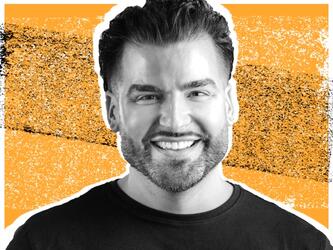
Grant Feller is the founder of storytelling consultancy Every Rung. His Substack, The Storytelling Newsletter, explores the world of brand storytelling.

We hope you enjoyed this article.
Research Live is published by MRS.
The Market Research Society (MRS) exists to promote and protect the research sector, showcasing how research delivers impact for businesses and government.
Members of MRS enjoy many benefits including tailoured policy guidance, discounts on training and conferences, and access to member-only content.
For example, there's an archive of winning case studies from over a decade of MRS Awards.
Find out more about the benefits of joining MRS here.



0 Comments