


Are we asking too much of face-to-face interviewers?
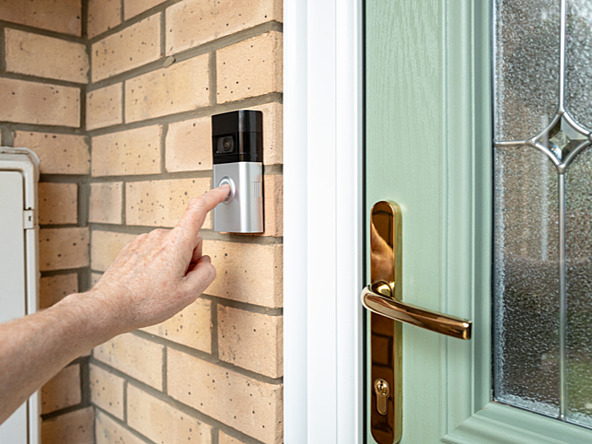
We're constantly reminded not to let strangers into our homes, share personal information or trust unexpected approaches.
Yet in face-to-face research, we routinely ask interviewers to overcome every one of those perfectly sensible concerns.
On a recent financial wellbeing study, our interviewers were asking people to invite them into their homes for a 30-minute conversation that could include questions about debt, mental health and whether they could afford everyday essentials.
Think about what we're asking of both people. The respondent must decide whether to trust a stranger with deeply personal information, while the interviewer follows a buddy system because entering someone else’s home carries risks of its own.
Both have good reasons to be cautious. Yet we expect the interviewer to bridge that gap, repeatedly, throughout their working day. And that’s before they've asked a single survey question.
What are we actually measuring?
I've worked in face-to-face research for more than 25 years. Technology has transformed the job. Tablets, automated routing and real-time data have made interviewing and quality control considerably easier. But technology cannot establish trust on someone’s doorstep.
We measure completed interviews, quota achievement, productivity and data quality. We scrutinise the numbers, often daily. But those numbers tell us little about what it took to achieve them.
Numbers don't show the repeated approaches, rejection or emotional judgement required when somebody reveals they're struggling to feed their family.
Nor do they show the interviewer who has just listened to something deeply upsetting, gathered themselves and approached the next household with the same warmth and professionalism.
The output records what happened, but it doesn't record everything that had to happen to make it possible.
The assumptions we don't always question
When a research brief specifies a sample, geography, interview length and deadline, those requirements can quickly become fixed expectations.
Who has tested whether the audience is realistically accessible? Whether the proposed hours make sense? Whether the quotas can be achieved within the available shifts?
Crucially, who has asked the people who actually work in those locations?
Research specifications describe certainty, but fieldwork operates in uncertainty.
Those assumptions affect delivery and they influence who we reach, whose voices may be missing and ultimately the quality of the research itself.- The cheapest point at which to discover an assumption is wrong is before it becomes a commitment.
When the plan meets the real world
On a national rail research project, our team encountered cancelled services, missed connections, engineering works and interviewers stranded far from home.
Fieldwork doesn't stop at 5pm or take weekends off. When something goes wrong, someone must be available to make decisions, support interviewers and protect research integrity.
We were making real-time decisions about alternative journeys, interviewer safety and whether work could continue. These were the realities of research in an environment we couldn't control – not failures of planning.
By Monday morning, much of that activity had disappeared. What remained was a spreadsheet showing interviews completed against target.
Good fieldwork management can make difficult fieldwork look easy, and the easier it looks, the less visible the expertise behind it becomes.
Expertise we can't afford to lose
Research published by NatCen through the ESRC-funded Survey Futures programme found that the industry was struggling to replace experienced face-to-face interviewers, while the role itself was becoming more demanding.
That should concern all of us. We're relying on people who can establish trust, handle rejection, navigate sensitive conversations, recognise unrealistic expectations and adapt when circumstances change.
These aren't skills that appear overnight. If we measure their contribution only through completed interviews, we risk overlooking much of what makes them valuable.
What if we changed the conversation?
When a challenging brief arrives, one of my first calls is often to a field supervisor to ask: Where will we find this audience? Are those timings sensible? Is the expected productivity realistic? Would another approach work better?
Sometimes the answer isn't what I was hoping to hear, but I'd rather discover a problem before we promise something to a client than halfway through fieldwork.
That conversation can change the methodology, timings or cost. More importantly, it can make the research better.
Clients have budgets, deadlines and legitimate research objectives. Those pressures are real. But fieldwork expertise can help us meet those objectives more effectively, if we invite it into the conversation early enough.
So, are we asking too much of face-to-face interviewers? Perhaps the more important question is whether we fully understand what we're asking them to do.
Face-to-face research remains valuable precisely because it takes place in the real world. However, the real world is unpredictable, and delivering good research within it requires far more than following a questionnaire.
The people who understand that world shouldn't simply be the last link in the delivery chain. They should be part of designing the research in the first place.
Sam Day is field director at Critical Research

We hope you enjoyed this article.
Research Live is published by MRS.
The Market Research Society (MRS) exists to promote and protect the research sector, showcasing how research delivers impact for businesses and government.
Members of MRS enjoy many benefits including tailoured policy guidance, discounts on training and conferences, and access to member-only content.
For example, there's an archive of winning case studies from over a decade of MRS Awards.
Find out more about the benefits of joining MRS here.







0 Comments