


Giving room and arriving with respect: The qualitative researcher in Africa

Over many months I sat with 31 qualitative researchers based in 12 African countries and the UK.
Their combined work has covered almost the entire continent and over 150 years of experience, and they work in commercial insight, public health and development, from North to Southern, East to West Africa, in cities and in remote rural villages. However, what they share is a craft and a set of convictions about what it means and takes to sit with people in all their complexity and multiple levels of diversity.
Across a series of in-person and video interviews, I asked them how they came to the work, how they practise it, what it costs them, and what they have learned that no textbook taught them. When I asked if there is something called African qualitative research, except for one person, they all answered ‘yes’. Here are some of the themes that emerged from these in-depth interviews.
Common themes of qual practice across regions
The accidental researcher
Given different timings, different educational backgrounds, different focus markets, there should have been different entry points into qualitative research as a career. What I found instead was best expressed by this insights specialist.
Everyone that I know stumbled into all things market research. I did, too. (Teboho Chalale, South Africa and Namibia)
There is a selective process where the work itself attracts and retains the kind of individual who can do it, someone who is empathetic, has deep curiosity and is humble enough to keep learning. The work draws those who were made for it and becomes the proving ground.
The infrastructure other markets rely on to produce qualitative practitioners does not, for the most part, exist in Africa. The talent does. Africa could well therefore benefit from a more systemised approach to education and skills and knowledge transfer.
Giving room
When African qualitative researchers describe what distinguishes their work from the global norm, they reach for these words: Receiving. Inviting. Being with. Listening first. This is how a young researcher in Kenya describes how she relates to the local context.
Contextualised to local nuances. Giving room to. By that I just mean that, even us at the local level, we are still learning about our local context. (Winnie Mwea, Kenya)
Giving room is a disposition, not a method. It is the orientation a researcher takes toward the people being researched. The African qualitative researchers interviewed are not simply adopting good practice. They are inheriting a way of ‘sitting with’ people that is part of the DNA of the continent.
The essential quality of flexibility
A Ghanaian senior researcher Sally Deffor described running a focus group on a market day. Sally had all the formal elements of a focus group in place, the note taker, the introductions complete, when halfway through participants began drifting toward the market, a hub of community life. Treating this as a cue, she followed the participants and continued the focus group as an immersive session amid the market bustle.
“They are inheriting a way of ‘sitting with’ people that is part of the DNA of the continent.”
The ability to change tack, to adjust in a rapidly evolving scenario, and to keep the intention and focus of the study, despite wandering participants, electricity blackouts, participants not arriving due to travel constraints, and sudden venue changes, takes creativity, flexibility and quick thinking. This is a core strength and skill of the African qualitative researcher.
The trust infrastructure
Common across all the regions in Africa, each with its own nuances and expectations, is the emphasis on relationship. There is a threshold over which the qualitative researcher has to step to gain the trust of those they wish to listen to and learn from.
A senior researcher shared the beauty and responsibility of working with people in her country.
In Tanzania, there is this thing we call ukarimu. It is being kind to people, being welcoming. Even if you are a foreigner, we will welcome you. But you must come correctly. (Sheila Msangi, Tanzania)
The community receives the researcher with openness. The researcher arrives with respect.
Building this trust infrastructure could mean: asking permission from the community elder or imam to engage with a group; having women in the community recruit on your behalf to open doors; or, opening the focus group with a prayer. Researchers need to observe protocols, make courtesy visits and receive permissions in order to enter communities with due respect.
Challenges
Some of the key common challenges encountered by those interviewed were:
- For the sake of budget and efficiency, a research project will treat one country as the proxy for a region or even language group, such as Francophone Africa for example, which includes at least 21 countries. The single country shortcut paints a colourful continent in one colour. The researcher is left compressing diversity into a narrow field, under-representing the wide variety in culture and context.
- The methodologies the African qualitative researcher inherits are not indigenous to the continent. They originate in contexts and with assumptions far removed from African realities. Bringing these instruments into alignment with the conditions of African markets is the ongoing work of the African qualitative researcher.
- The African qualitative researcher often finds themselves invisible. To discover that you are footnote to a strategy that did not take your findings seriously is at the very least disheartening and, at the most, costly to all stakeholders. However, expertise and confidence that is understood in a London boardroom is not necessarily the same in a Lagos one. This is where African researchers must claim their authority – not through self-assertion, but with the expertise they have built over many years in wide ranging, challenging contexts.
The place of African qualitative research
Younger, digitally connected markets – markets the world will spend the coming decades trying to understand – are in Africa. Relational reading, which can’t be automated, is this continent’s core skill. Rapidly changing environments which lead to changes in human behaviour describe the normal working conditions of the qualitative researcher in Africa. For these reasons, the future belongs to Africa.
Mpho Mpofu is founder and chief executive at Masutane, a specialist qualitative research and consumer insights consultancy based in Johannesburg.
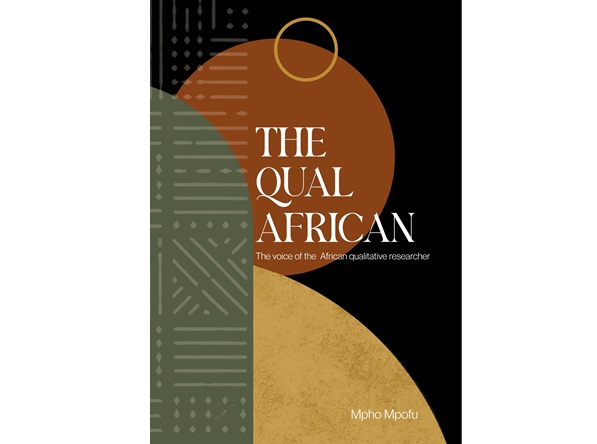
Mpofu is the author of The Qual African: The Voice of the Qualitative African Researcher, which is now published.

We hope you enjoyed this article.
Research Live is published by MRS.
The Market Research Society (MRS) exists to promote and protect the research sector, showcasing how research delivers impact for businesses and government.
Members of MRS enjoy many benefits including tailoured policy guidance, discounts on training and conferences, and access to member-only content.
For example, there's an archive of winning case studies from over a decade of MRS Awards.
Find out more about the benefits of joining MRS here.









0 Comments