


Changing expectations: How insight shaped the Currys store experience
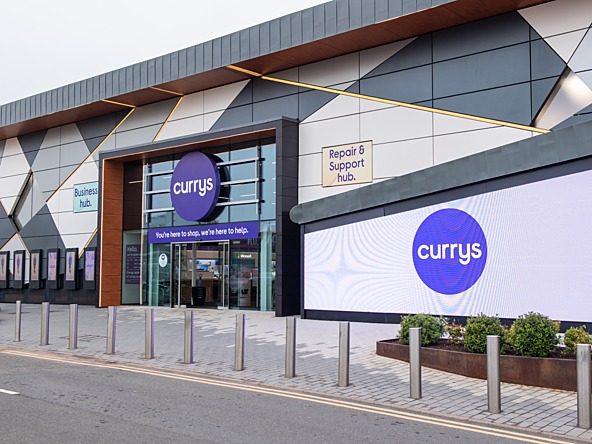
Have you ever been to a shop and found an empty shelf instead of the product you were looking for? It’s a common story across the retail sector, with consumers leaving empty-handed due to the absence of their preferred brands, or a product that was the entire reason behind their visit.
What do consumers do when they are faced with a shortage of their preferred stock? How do brands tackle this issue? What role can customer research play in shaping brands’ response? These are all questions that faced technology retailer Currys in 2024, with the brand wanting to understand barriers to conversion in its stores.
Currys commissioned research agency Basis to carry out research and discovered that on-shelf availability was a problem, with around a sixth of people who left the retailer’s stores without having made a purchase having intended to buy a specific product. The project with Basis, which focused on traditional research techniques, supported a new strategy for Currys to help it address stock shortages and customer engagement in store.
Lewis Day, customer strategy and value proposition director at Currys, sits within the customer and commercial division in the UK and Republic of Ireland business, covering insight, customer experience and experience improvement management. The background to the project, he explains, was changes to how people shop in the UK, particularly since Covid-19 and with the rise of online retailers in recent years.
Currys has a large number of stores nationwide, in both out-of-town and city centre locations, making its store footprint a point of difference in comparison to many of its online-only competitors. “The pandemic, in terms of what it did to the business, was stark,” Day says. “We genuinely had no concept of how much we relied on our stores if customers had issues. When all the stores were forced to close, we were on fire as a business – contact centres were overrun.”
There have also been large changes to the electronics market, which spiked in the pandemic but then had a few fallow years, only recovering relatively recently. The market has shifted to online shopping, with older customers who were forced online during the pandemic having stayed there and now happily purchasing via that channel.
There has also been a growth in omnichannel journeys for shopping – for example, people researching products online before coming into store, which has presented staff with new challenges. “Customers come in more informed than they ever were before, which is great but also really challenging,” says Day. “Even if you are a 40-year veteran of electrical retail, like some of our store managers are, they can never know as much as a customer who has done two weeks of dedicated research into two TVs.
“The lasting opinion of us as an organisation that customers have, whether it is positive or negative, is a colleague – that is the thing that sticks in people’s minds.”
A new model
These changes in customer expectations of a store experience lie behind Currys’ project with Basis, which focused on the 16% of customers that go into a store intending to buy but who ultimately leave empty-handed. Currys wanted to examine why those customers were not following through on their purchase intentions, and to therefore look at how they could adjust their approach and the store experience to boost sales.
“If [Currys] managed to convert an extra 1% of that audience, because people are purchasing big ticket items, it’s a lot of money,” says Chris Hope, head of client strategy at Basis. Basis chose to use exit surveys combined with qualitative research to better understand the motivations behind store exits. The approach, initially based in out-of-town and city centre premises in Leeds before expanding to Swindon and Bristol, used a short questionnaire to identify which customers exiting the stores fit the criteria of having intended to purchase goods.
The research combined the information with Currys’ data on footfall within the stores as well as the average transaction value to estimate the amount of lost revenue the stores had faced. Once potential respondents had been identified, the Basis team carried out a longer exit survey investigating the reasons for the customers’ departure, empty-handed, as well as what could have been done to remedy the issue.
In each of the three waves of the research, Basis surveyed around 500 people. “In a world where everything is dominated by innovation and AI, we didn’t shy away from the fact we had a really traditional methodology,” Hope adds.
“The lasting opinion of us as an organisation that customers have, whether it is positive or negative, is a colleague – that is the thing that sticks in people’s minds.”
The qualitative work was based on people identified in the surveys who had interesting stories. The research asked participants to replay their journey in the store, and what issues they faced, what would have been a positive outcome for their visit to Currys and what the brand could have done to improve the experience. Questions included whether respondents could find the product they wanted, if they wanted to speak to a member of staff, what the colleague said if they spoke to one, and whether the colleague checked online for the missing product or suggested an alternative.
Matt Warman, qualitative director at Basis, says: “What that allowed us to do was to get the depth of the human story, which we could then communicate to the senior leadership team..
“These were 20-minute, one-to-one, face-to-face interviews, and they were really effective at digging into the issues.”
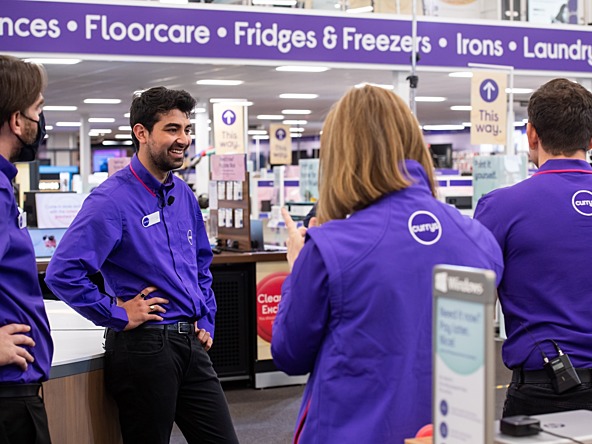
The benefit of the qualitative work was that it helped humanise the data for the senior team. “Customers walked into the store and there was a fixture with small domestic appliances at the top and empty shelves underneath, and I don’t think people [working at Currys] realised what impact that was having,” Warman explains. “There’s an expectation that the customer will ask a colleague, and the colleague will go out to the back of the shop and see if they have one in the warehouse. But actually, what happened was, people would take a look, see the product is not underneath, see it as out-of-stock and then leave. As well as gap scanning, we changed the messaging so that if there is a gap, customers are nudged to ask a colleague.”
Making an impact
The results were presented to the chief executive and senior team and led to significant changes in how Currys operates. The company implemented ‘gap scanning’ – essentially, searching for gaps in the store display in order to replenish items quickly before shortages are noticed – which meant that the proportion of display that was missing stock fell from 10% to between 1% and 3%. Warman says: “As well as improving the sales performance, it gave store managers a feeling of greater control and oversight because they knew where everything was and could therefore replenish immediately.”
The work with Basis has “fundamentally” changed some of the retailer’s planning and processes, says Day, and led to the first first monthly mystery shopping programme it had held in 10 years. The programme considers on-shelf availability and staffing in Currys stores, and its reintroduction was a direct consequence of the research into lost sales. “The research allowed us to hold a mirror up to ourselves, which is what customer insight should be – this is what people think of you, not what you think of them,” adds Day. “It was so close to customers and colleagues. It was completely and utterly unbiased by any of the things we had done in the past.”
Leading with actions
Day says that his role at Currys is to be the voice of consumer conscience, and he carries out quarterly meetings with the executive committee to show them what’s happening inside the business, as well as prompting action on any issues that are raised.
Key challenges include responding to issues within the business, such as in the Basis project, and communication with customers. For example, Currys has introduced SMS reminders to pick up products ordered for collection in-store, after emails often went to junk folders, frustrating customers. Other issues with staff wait times have been addressed with new guidance for staff on approaching customers.
“The research allowed us to hold a mirror up to ourselves, which is what customer insight should be – this is what people think of you, not what you think of them”
A recent piece of research covering 15,000 customers looked to examine the biggest drivers for customers, with price, product availability, ease of shopping and trust among the highest scoring factors. “It doesn’t matter if a product is in store if the customer can’t take it off [the shelf],” Day says. “Research, from the CEO down, has reset our customer strategy.”
According to Hope, the ideas tested in the Basis project on on-shelf availability were rolled out nationally after a trial in stores and have been incorporated into the training for more than 9,000 store staff at Currys. There has also been an increase in sales as a result. “Helping to retrain 9,000 people is a lot of effort, and time in these companies is money, same with making decisions over processes or how people are spending their time in store to serve customers,” says Hope. “Because [Day] is close to the business and is the stakeholder as well as the insight head, it works really well.”
The results also show the important role evidence and insight can play in changing company policy. “The reason it worked and the reason why people took notice is because it led with actions,” concludes Hope. “Focus on the important stuff. Insight teams have so much demand on them because there are so many questions, it must be a real challenge to work out what they should do. Sometimes, I think you should focus on the things that make you the most cash.”
Photography supplied via the Currys media library

We hope you enjoyed this article.
Research Live is published by MRS.
The Market Research Society (MRS) exists to promote and protect the research sector, showcasing how research delivers impact for businesses and government.
Members of MRS enjoy many benefits including tailoured policy guidance, discounts on training and conferences, and access to member-only content.
For example, there's an archive of winning case studies from over a decade of MRS Awards.
Find out more about the benefits of joining MRS here.










0 Comments