


How I work: Scott Clement
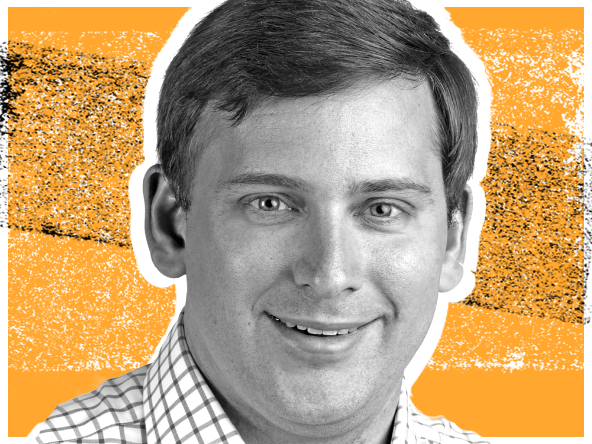
What does a typical day look like for you?
I typically start my days trying to figure out the next steps to execute any of our public opinion polls. That could involve brainstorming topics with colleagues, writing or editing survey questions, taking in feedback, or researching how to ensure our samples are representative as possible.
I take a few minutes each morning to think about how I can boost our coverage of public opinion across the newsroom. That involves scanning newly published polls, mostly from the US but some international, and sharing the most interesting results with colleagues who might want to write about them. It’s a two-way street as well; reporters and editors flag dozens of polls for me that they find interesting each week for insight on their quality and significance.
How does your relationship with the journalists work in terms of polling?
At the Washington Post, the polling team is embedded within the newsroom. I’m talking with reporters and editors all the time. It is absolutely fully integrated. Reporters and editors who have ideas for polls are where we get some of our most interesting ideas for projects. It also helps us stay very current.
The real power boost in the Washington Post is that I have access to people who are covering national and international issues every day. They know what matters. They know what’s relevant. It’s pretty much the ultimate sounding board for a questionnaire.
What issues are keeping you busy at the moment?
Conducting polls that match the breadth of everything that the Washington Post covers has been a big focus this year. If voters’ or people’s opinions are relevant to an issue, I think we can probably do polls on that topic. Keeping up with that breadth is a challenge, but one I really enjoy.
I also pay a lot of attention to the midterm election campaign and what polls can tell us about how voters are deciding whom to support. It’s following voters. It’s following what they care about, how they’re deciding. Ultimately, the big question in the end is what they are going to do, but throughout the whole campaign, we’re using polls to understand why they’re coming to their decisions.
What attracted you to your current role?
I grew up in northern Virginia reading the Washington Post, and I was inspired by a former pollster at the paper who responded to my questions for a college class assignment. I was trying to figure out some methodological details of a poll. I was really getting the survey research bug in college. During, I’m sure, a really busy time, that pollster answered my questions. I don’t know if they regretted it in the end because I kept coming with more questions and more ideas, but that really tickled me that, this is something you could do. This is something that’s valued in newsrooms, something that could help contribute.
The Washington Post is a spectacular place to conduct public opinion polls. It’s just full of smart and curious people who love to collaborate on ambitious stories. I think I have the best job in polling.
What motivates you in your career?
I think public opinion is endlessly fascinating. It’s really important for us to understand each other. That was the biggest thing that fascinated me when I first learned about how surveys are conducted, how to draw random samples – you can actually survey 1,000 people in a population of hundreds of millions and come within a few percentage points of the results. It’s not just a fun party trick.
We do want to know what people think. We do want to know how many people approve of the president, what people think of a policy, what people think of a war. These things are interesting in their own right. They’re also really important for democratic society in understanding how we make decisions, what we value, what we don’t, how we change our minds on different things. There’s always a new interesting question or topic to explore.
What’s your style of working?
Reading, writing and having informal conversations with colleagues is my day-to-day style. I’m very fortunate not to have my days filled with meetings, which helps me focus on the next steps I need to move any work forward and also allow some time for different ideas. I’m at my best when I can concentrate on something for at least 30 minutes. I limit alerts on my phone, try to prioritise answering messages based on urgency, so that I can put in some of those longer shifts of really trying to think about an issue.
What motivates you outside work?
I enjoy life with my family and friends in Washington DC and elsewhere. I’m very much an outdoor cat, and the city’s a wonderful place to walk and bicycle around. I enjoy watching and playing soccer, attending concerts, playing in jam band with friends. I try to stay active.
How do you achieve work-life balance?
I try to keep normal workday hours during the week and take it easy most nights and weekends. I don’t fully schedule myself out. But breaking news events are the exception. I learned about the US strikes on Iran in bed on a Saturday morning. We decided to conduct a flash poll on the issue on the Sunday, which we published on Monday morning. It’s what I love to do. Fortunately, events like that don’t happen every week, but it’s part of the job, and it’s also part of what’s most exciting.
Election season is always a huge lift, so there’s no way around that either. During the cycle, I just try to pace myself, take care of myself. Afterwards, I take a big vacation with my wife to celebrate, unplug and explore a new place. We went to the Galapagos Islands after the 2024 election, and that was just fantastic. I turn off the phones, really unplug, and come back refreshed and excited.
What are your thoughts on the polling industry’s current standing?
The polling industry has learned a lot of tough lessons over the last couple of decades. The 2016 and 2020 elections were some of the least accurate elections for polls in many years. I’ve been very involved in industry groups, but also our own groups trying to sort out what was going on, and there’s a number of things. They were rooted in different types of people responding to surveys at different rates, and us not being able to observe and measure that, and correct for that.
It’s been a really good spur to change our methods. The 2024 election was a really good showcase of some of the strides that were made: we still had Democrats and Republicans responding to polls at different rates, but our polls were much more resilient to that pattern because we were using samples where we could observe that difference and we could control for it in a number of ways.
I don’t think we’re out of the woods. We’ve had serious problems and we’ve taken significant steps to solve them. It’s not done, but I’m happy with how they’re going. Even in, for instance, a recent Virginia election about redistricting, something that I think polls would really struggle with in the past to measure, our polling was bang on, two weeks out in a really tough cycle. That gave me a lot more confidence that the methods we're using are doing better.
Let’s step back, though. I think over time, we gained too much confidence that polls could be precise. The big change has been changing how we communicate polls. The people that I talk with that are not highly engaged in media and polling take a good grain of salt with polls than maybe they did 10 years ago.
How do you take data quality into consideration in your work?
We have unique problems and challenges in conducting public opinion polls that maybe aren’t relevant in other areas of market research. We have the need to conduct polls really quickly because of quickly changing news events. We have to overcome some differences in response rates by people who are more or less interested in politics or who support one party or another.
One lesson I’ve learned is that long-term methods that worked even two or four years ago may no longer work in an upcoming cycle. You shouldn’t necessarily toss them out, but you need to be scrutinising how well they’re performing and always changing.
The other lesson is there’s really no replacement for random sampling. This method was figured out in the 1930s and 1940s. Every time that we’ve had a significant deviation from it, we tend to get ourselves into serious trouble. Every poll that we conduct is rooted in random sampling methods, and they are the ones that have the best track record of projecting to the population.
A number of our surveys initially recruit respondents by mail; super slow method, but one reason is that you can draw a random sample of US household addresses. You can’t draw a random sample of e-mail addresses. You can’t draw a random sample of online users. We basically just have to stay really creative about ways to get high quality samples of people.
How do you use AI?
We don’t use AI to replace survey respondents. Our survey respondents are human, and so far, I haven’t seen any signs in research that there’s a replacement for that, partly because AI is not really great at predicting the diversity of people. AI has been super useful for other aspects of the survey research process. The biggest one is classification of open-ended or text survey responses.
I think AI allows researchers at every level to focus on the more difficult questions, the things that are also more fun to answer, like, what do you want to know? What does the data mean? What story are they telling? You can ask AI to tell this, but it’s not going to do as good a job as a trained researcher because it doesn’t have the context that you have if you’re following an issue closely.
How are working practices in the research industry shifting?
The big picture is that respondents have changed. Over the last few decades, people have been badgered for so many things every day. It’s a very noisy world to live in, in terms of requests, and surveys are one of those requests. This isn’t a novel thing anymore, being asked to survey, and so response rates have plummeted.
We still need accurate data on what people think, but we need to find ways to produce accurate data in an environment where the vast majority of people are going to refuse our survey. The answers to that are evolving.
One thing that has been shifting in a positive direction is transparency. Polling firms, particularly in the media space, have set very clear standards for the kinds of information that should be published every time you release a poll. The next step really for us is delivering that information in a more consumable way; something that isn’t only interpretable by people who are well versed in these things. It should be understandable to everybody. We know people are curious and they’re sceptical, and they should be.
Are you optimistic about the future?
I’m optimistic by choice. There’s lots of things that aren’t ideal about society and the world right now. We shouldn't ignore them and we need to find solutions to them. What can I actually do? What is my role?
I think the Washington Post mission contributes positively to society and reporting in general. I’m in a very unique and, I think, interesting position where I can shape that. I can really move the ball forward on conducting higher quality polls, asking better questions. I feel a lot of agency in that, and other things that I don’t have a lot of agency in, there’s not much I can do about that. I haven’t washed my hands of it entirely, but there’s a lot to be optimistic about in the day-to-day.
This interview has been lightly edited for clarity.
The How I work series explores how research leaders manage work and life, lead teams and find inspiration.

We hope you enjoyed this article.
Research Live is published by MRS.
The Market Research Society (MRS) exists to promote and protect the research sector, showcasing how research delivers impact for businesses and government.
Members of MRS enjoy many benefits including tailoured policy guidance, discounts on training and conferences, and access to member-only content.
For example, there's an archive of winning case studies from over a decade of MRS Awards.
Find out more about the benefits of joining MRS here.






0 Comments