


Thinking in space and time
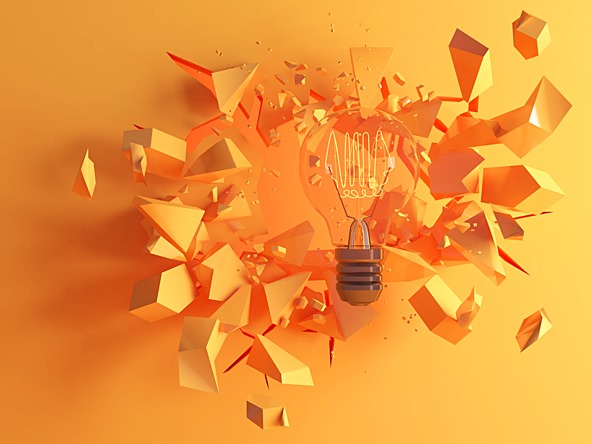
How do you think best? I’m going to suggest that you take that question, and think about it. How meta. Consider the conditions that help you think well, whatever you excel at – big picture, grassroots, strategic, tactical, sharp and clear. Perhaps it’s outside, on a walk, in the shower, in a brainstorm with others, with a cup of tea. When you’re not bloated by a big bowl of pasta. When you’re up against a deadline and the adrenaline brings everything into sharp focus.
It’s a truism that AI can’t do critical thinking, but it can create a good enough simulacrum of this to risk us chipping away at the core of the value-add that we human beings bring to insight.
My belief is that we simply don’t celebrate this enough as a sector – the unique value of our diverse human brains coming together to generate insight and solve problems. Of course, AI tools can help – who is going to hold their hand up to say they wholeheartedly reject these? The watch-out is that we outsource too much to AI – known as cognitive offloading – and we don’t engage our brains quite as thoroughly as we might have done.
What can seem like an efficiency gain can actually slow down the journey towards clarity and tangible implications to act on. This can sometimes mean we don’t see things as well as we otherwise could, because we’ve stayed at the superficial level. On positive side, though, if we make the most of AI, we gain efficiencies that can free up time to think better – so how will we use this?
Only human beings can truly make meaning out of data, observation and hearing people talk – and listening for what they don’t say too. We can do this because we have an intention behind what we do, and we can understand not just what something means, but why it could matter. What does thinking look like at its best? Here are a few reflections, all backed up by science, linked below.
1: We think better when we pause
There’s something in how things slot into place, and we can see from fresh angles, once we step away. It feels like we all step away less in this world of relentless deadlines and optimisation for efficiency, or supposed efficiency.
A 2025 meta-analysis of 37 studies (covering 63 experiments)1 showed that wakeful rest is an effective way to facilitate memory consolidation and retention. Think: getting away from the desk, having lunch outside, having a peaceful weekend, or taking a proper holiday.
2. We think better when we allow for some friction
A scientific review paper, published in early 20252, studied data from a range of studies exploring the effects of handwriting and/or typing on cognitive processes.
The results suggest that handwriting and typing activate different areas of the brain. It suggests that in taking more effort, handwriting engages visual, motor and cognitive processes more extensively, and this can enhance the ability to retain information over the longer term.
From a creativity point of view, studies using brain imaging techniques have shown that handwriting engages more areas of the brain associated with critical thinking and creativity, and points to the slower pace of handwriting fostering deeper thought.
If typing is already less good for memory retention than handwriting, what happens when we outsource note-taking to AI? I’ve got to admit, I’m leaning on AI transcripts a lot more these days – but I’m increasingly wary that not actively taking notes means I’m not engaging nearly as deeply.
3. We think better when we get outside
There’s a few different dimensions to this, but fundamentally it’s about recognising that thinking is not just done in our brains, but in our whole bodies. It’s something many of us recognise as true, that we can process our thinking better while we walk or run.
It’s hard to find good evidence for this specifically, but there’s ample robust evidence that exercise is highly beneficial for memory and learning. There’s also some evidence that exercise outdoors is also specifically optimal, plus that exercise and nature exposure together have an additive impact on brain function.
One study found significant cognitive improvement on the ‘Stroop Test’ (which provides indications on working memory, attention and cognitive flexibility) after people had walked both inside and outside3, but elevated mental restoration was found amongst those who had walked outside.
Pausing, making an effort, and getting outside are just three examples of how our uniquely embodied human selves can be supported to think best. I can think of more, and I will explore these other themes separately.
Where I want to leave this is to reflect on expansiveness versus linearity. To reflect on how our thinking opens up when we allow it to, and how we can make connections we couldn’t otherwise make. Our minds can roam into unexpected places, and the ‘ah has’ can come. Thinking as human beings, rooted in space in time. Thinking in 3D. Maybe it’s the future we need to see and create for ourselves, beyond the screen.
Louise McLaren is managing director (London) at Lovebrands and a columnist for Research Live
References

We hope you enjoyed this article.
Research Live is published by MRS.
The Market Research Society (MRS) exists to promote and protect the research sector, showcasing how research delivers impact for businesses and government.
Members of MRS enjoy many benefits including tailoured policy guidance, discounts on training and conferences, and access to member-only content.
For example, there's an archive of winning case studies from over a decade of MRS Awards.
Find out more about the benefits of joining MRS here.





0 Comments