


Effective creative principles remain the same whether or not ads use AI, finds Kantar
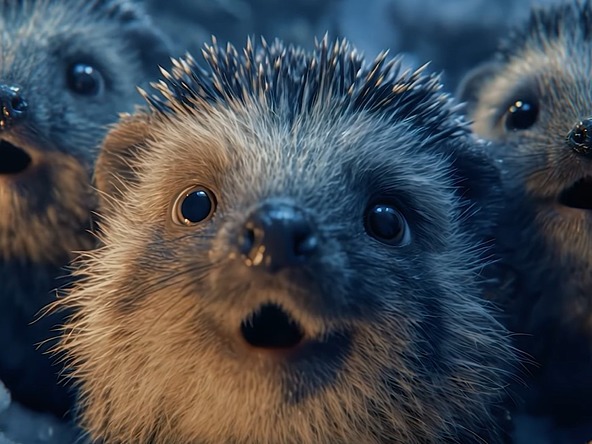
Kantar tested two of Coca-Cola’s ‘Holidays are Coming’ Christmas adverts – one released in 2024 in the UK, and one released this year in Europe. Coca-Cola used AI to produce both commercials, with the 2024 ad featuring AI-generated ‘people’ and 2025’s creative featuring woodland ‘animals’.
The study, which used facial coding through Kantar’s Link+ approach, found that the spot featuring ‘animals’ scored more strongly on most metrics. Audiences responded more powerfully to the emotive expressions from the ‘animals’ in the 2025 campaign, while the ‘people’ in the 2024 ad were more likely to evoke surprise than smiles from viewers.
Expressiveness, the extent to which an ad evokes any kind of emotional reaction, was higher for the 2025 ad featuring ‘animals’ (video linked above), rising to a higher level towards the end of the ad.
Lynne Deason, head of creative excellence at Kantar, said there was a “difference in emotive power” between the two ads, and added: “With anthropomorphism, there is a bit more creative license, because we don’t know what a hedgehog looks like when it gasps with surprise.”
In contrast, said Deason, the ‘people’ featured in the previous year’s ad are more static, meaning less of an emotive narrative arc for viewers. “What you’re also seeing is that with the animals, you’ve got a transition of expressions, whereas in the ad with the people, the faces are smiling – but we don’t really see someone smile.”
However, she added: “It’s not that the ad is not effective – it’s still one of our top performing ads this year. The music comes out as one of the top performers every year. It’s still got the trucks and all of the values that makes it feels like ‘Holidays are Coming’.”
For the research, participants were recorded watching the ads twice, with Kantar’s research partner Affectiva using machine AI decoding to denote what expressions are on participants’ faces at different moments in time.
Deason said: “That allows us to see how much emotion the ad is evoking. Emotion is key to effectiveness, because we pay attention to things that make us feel something, and because it shapes whether we’re likely to remember something or not.”
Participants were also asked follow-up questions and shared their thoughts and feelings about the ads. According to verbatims captured about the 2024 ad featuring ‘people’, some participants noticed that it was AI-generated and that created a disconnect with them, which Kantar found was in line with a previous analysis of 356 AI-generated adverts the company produced earlier in the year.
Deason said: “Where generative AI feels obvious or if something doesn’t look quite right, that can create a sense of confusion or a disconnect for people. It’s not that generative AI doesn’t work at all – you’ve got to make sure you’re executing it really well and getting it right.
“When you’re trying to portray real people using generative AI, you’ve got to make sure they look real, and the tech is getting better at doing that – it’s getting harder to tell. Brands need to make sure that they are doing that well.”
The analysis of 356 ads found a range of performances across AI-generated adverts, with the same spread of distribution as ads created by traditional means, according to Deason. She said: “What that tells us is that it’s really the fundamentals that still matter – having consumer insight, being bold in creative, having brand centricity. All the things that we would say matter still matter the most, but when generative AI is obvious or poorly integrated, it can hurt performance.”
Deason said ads created with AI are still capable of evoking emotion, but cautioned that it's “not always in the right way”, adding: “You’ve really got to make sure that you’re triggering the right emotions, but that would apply to any kind of ad. You need to make sure the narrative arc is landing in the way you want, and people are interpreting what they see in the way you hope. And of course, brand centricity remains key. We see that branding tends to be a little bit lower in generative AI ads.”
Pictured: Screengrab from Coca-Cola’s Christmas 2025 advert ‘Holidays are Coming'.

We hope you enjoyed this article.
Research Live is published by MRS.
The Market Research Society (MRS) exists to promote and protect the research sector, showcasing how research delivers impact for businesses and government.
Members of MRS enjoy many benefits including tailoured policy guidance, discounts on training and conferences, and access to member-only content.
For example, there's an archive of winning case studies from over a decade of MRS Awards.
Find out more about the benefits of joining MRS here.










0 Comments