


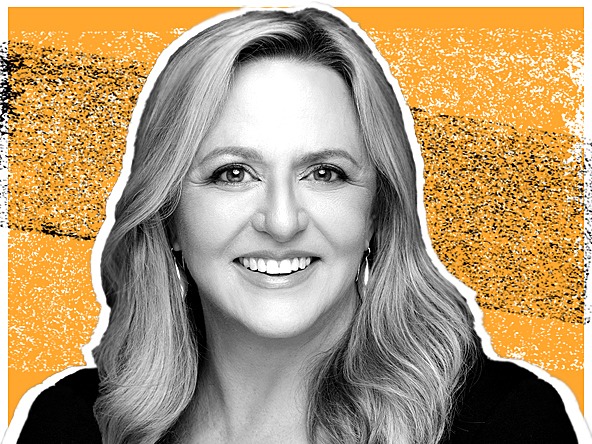
How I work: Pamela Forbus, SVP, global insights & analytics, Mondelēz International
How did you end up working in market research?
For the first dozen or so years of my career I worked in advertising, mostly automotive, jumping agencies to get promoted. The account manager was the sales guy, the creatives were those wacky creatives.
It was the account planner that held the room and everyone’s attention, with people on the edge of their seats. They were talking about the consumer. I wanted to be that. I tried for five years to try to get into the agency account planning side, and I couldn't do it. They wanted me to be in account service.
Eventually, we moved to Texas, and I took a year off to rethink my career. It was tough, going back to one salary with two kids. But then I got a contractor role at [PepsiCo-owned] Frito Lay, and I convinced them to take a bet on me. They hired me as a manager in market research in 2000, and by 2007 I was VP of the function. I had a great boss who was ex-P&G, classically trained, and they taught me everything. With my ad agency presentation skills and leadership skills, I rose pretty quickly. It was the best decision I ever made.
I spent 14 years at Frito Lay here in Dallas, and then the last three in a global role across food and beverage for PepsiCo out of New York. Then I left. It was hard when I had been in it for that long, but things were changing, and it was just a good time.
“It was the account planner that held everyone’s attention. They were talking about the consumer. I wanted to be that.”
I took a role at Disney – we sold our house and moved to California. I worked in the movie business for about three-and-a-half years, and then Covid hit, things got shut down, and I had to rethink. Budgets were going to be tight, I was furloughing my team, talking about layoffs.
‘I’m too late in my career for this,’ I thought. A former colleague of mine, who had been CMO at Frito Lay, had become the CEO at Pernod Ricard and asked me to come be her CMO. At first I was like, ‘No, you need a really good CMO, let me give you names’. But she said, ‘No, you'd be great.’
What she needed was a rebuilding of the marketing capability, and my team at Frito had led that – our own marketing capability as well as insight. It was an awesome ride, working on big brands like Absolut and Jamesons. Then for family reasons, I took 10 months off and decided to go back into insights. And here I am at Mondelēz, leading insights and analytics (I&A) again, globally.
How large is your team?
My team lives everywhere in the world – from Singapore to Colombia to Toronto – so I get to work remotely, which I love.
There are about 240 total across the whole I&A function, with about 40 in the centre reporting directly to me as sort of a COE [centre of excellence]. Everyone else is embedded in the business. I'm the function lead, with a leadership team that includes those business unit leaders. We govern the function together, set the priorities, review our budget priorities.
Right now, there’s a lot of stress on the business, on business performance and shifting consumer demand and trends. My team in the centre coordinates with all of the big business units – US, India, UK, China – to really understand what’s happening, what we think is going to happen, and provide advice on shifts we need to make.
It is very challenging, which gives I&A an opportunity to have a voice. We’re deemed very important right now, so we’ve got to deliver.
What’s an average day like for you?
It’s a full day of back-to-back meetings (pretty much by video – Teams or Zoom or Google Meet), emails and getting ready for senior leadership meetings – fire drills, questions that are being thrown at us, removing any roadblocks the teams are feeling, resource optimisation… there’s never enough people, time or money to do what we are asked to do.
I travel maybe every six weeks to one of our offices – sometimes Chicago, sometimes New Jersey – and occasionally, Zurich, where Cadbury is.
I'm working hard at reallocating resources to the most important thing, ensuring stakeholders are aligned because when I deprioritise something, it’s that person’s number one thing – I have to get alignment that this other thing is more important.
It’s funny, I just came back from TMRE, the big research conference here in the US, and a lot of vendors there wanted to talk to me about their new tools and techniques. And I'm like: ‘You realise I don't make any decisions on that kind of thing.’ I empower my team in the different areas – analytics, or shopper innovation – to build the best toolkit, and I get involved in discussing some of those toolkits. But I don't work on projects anymore like that. I think people misunderstand what the ‘head of’ job really is, which is not to do insights and analytics.
What are the top three priorities you face at the moment?
It’s definitely business performance diagnostics and getting ready to report those to management. More than just telling the weather, I have to forecast and predict potential future scenarios so we're prepared for them.
We're always a little ahead of where the business is operating – we might need to accelerate this piece of innovation, or rethink what we're doing in this area to meet consumer demand. Basically, it’s all about really understanding where the is consumer today, how they are feeling. There’s a lot of pressure on everyday consumers. I read an article that said one-in-four in the US are living paycheck to paycheck, which is a terrible position to be in.
We're also having to [look at] pricing because of commodity increases, trying to ensure our company understands and empathises with the consumer as we make some of these big changes – and not to be shocked when they reject them.
My second priority is on data quality, building solid data foundations so we can apply AI tools. We've already deployed a few, and we have such an ambition to rethink how work gets done in the I&A function. It requires really strong data foundations for AI to work.
The third is keeping track of what [the function is] spending time and money on. There’s the stated strategy on the page, what we should be doing, and then there’s what is everyone doing… and asking if there’s a disconnect there. Are we not spending enough money on shopper insights, for example, or are we spending too much on rethinking our strategy over and over?
How would you describe your leadership style?
My stock answer is I’m a servant leader – I figure out what people need and support them.
But I think people would describe me as nurturing, in that I am definitely not a micro-manager. I give people long leashes to build their own vision and agenda. It’s got to fit the broader agenda, but there’s a lot of room there to be inventive and bring different perspectives.
I find insights and analytics people to be extremely curious and inventive, and if you keep them in a box, that’s not empowering – you're not going to get the best of them. You’re not going to advance the craft either. There are wrong ways and right ways to do things but as long as the rigour’s there, or we are piloting something to learn a new technique, I'm all for it.
I love change, I love to invent new things, and so I will lean into that. If anything, I need to have people on the team who will say: ‘Hey, this is working, let’s not break it right now’ – especially in this world of AI, where we need really solid foundational data, and if we disrupt that it could have implications down the road for AI.
I like to role model. I will double-hat and actually do some of the work when it comes to internal deck-building. I learned from my bosses how to write good management decks by sitting next to them and doing it together. I find I do that a lot with my team, when there’s open roles. That’s really eye-opening to a junior person who gets to watch me build a deck or tell a story to the senior leaders, and maybe even sit in on the meeting and hear how it goes.
How do you work across borders and cultural differences?
In my first global role I was so naive on cultural differences. I had not lived abroad, but I was now working with all these different cultures.
Today, I'm a lot more savvy, and I know the nuances. That’s important because this is an influencing role, it’s not a decision-making role. I have to understand where people are coming from and read between the lines a little bit: ‘Are they challenging me, because it sounds like they're in agreement? I know this culture is a little bit deferential, so I need to really call it out – are you good to go or not?’
That comes with experience, savviness and really clear communication. The thing I do a lot in these instances is let me play back what I think I just heard… and I'll put it in terms of what I interpreted, not what they said. And if I get it wrong, I ask them to help me clarify, because communication is the only way to really get through those differences.
How do you manage your work-life balance?
If I have to really focus and not be distracted and I've got some big deadlines, I get out of the house and to a small office I rent. But if I'm starting at 6am sometimes I start at home because I just don't want to get up that early.
I'm in a different life stage. There was time when this was impossible, when your kids are young and it’s just impossible to have work-life balance. I quit trying to. I just figured out what my work-life flow was going to be to make it work – and I don't think I got it right. I do have regrets that I spent too much time at work when my kids were young.
“I need to have people on the team who will say: ‘Hey, this is working, let’s not break it right now’ – especially in this world of AI, where we need really solid foundational data.”
So, as I'm older and more mature, I’m much more rigorous about it, and I have an ability to just turn it off. I can a wing it a little bit more than I used to and not have to feel over-prepared for everything. But there was a time I couldn't do that., when I had to over-prepare because I was working on building a career, achieving and getting promoted.
I'm not necessarily doing that now. This is about making sure the team’s operating at the highest level.
I have a grandson. My youngest is a single mom, and so I help co-parent – it was one of the reasons I took this job, to be remote, and the hours are different because I'm working with Europe and the east coast.
I live in the centre of the US, so I work from 7am to 3pm or 4pm. I'll go get him from school and spend some time with him, and then after he’s in bed at seven, I can do a little more work at night. I just make it work, and it’s wonderful. I can't wait until the end of the day to go get him.
Do you think he was the catalyst for you readdressing your work-life balance?
I do, because I’m realising now how quick and precious those years are, that I will never get back. I missed some of those things when my kids were little and I get to do it all over with him, in a way. I get down on the floor and I’m in the moment, which is hard for me. One of the things I’ve always had to work on is just being in the moment, not thinking about what I should be doing.
What inspires you?
Behind me is one bookshelf of maybe 10 – I’m a voracious reader. Audible and podcasts are just as good. I tend to listen to more fiction on Audible and it takes my brain away while I’m doing other chores.
I love movies and stories, and I listen to a lot of non-fiction. I find podcasts to be really helpful for the business stuff. I just listened to one about AI and how it all started back in the early days, and where it is today, and they reference two or three books that now I'm going to go get and I will probably read.
What other hobbies do you have?
I've been golfing since I was 12 years old. I love the sport. The point is, you have to be in the moment when you're golfing. If you're thinking about anything else, you’ll have a really bad golf game.
You have to totally turn everything up and really focus and tune that mind-body connection. It’s almost like meditation for me. I play with my husband, so it’s our together thing. It’s fun, we visit beautiful places.
It’s the same thing with pottery. If, if I'm working on the wheel and I'm building a mug or a bowl, if I start thinking about other things, it’s a mess.
How would you advise someone to balance priorities at work?
I speak to a lot of women’s groups. It’s particularly hard for women if they have young families. Your career is not a sprint, it’s a marathon.
There will be times when it’s more important to be focused on family and maybe less on career, and know that there’s a season for everything.
There was a time when I took a step back so my husband could accelerate, and then my career was taking off, and he decided to retire early to take care of the home so I could accelerate.
I’ve made career changes very late in life. I got to a high level that I never expected to. I always felt I’d started too late. I never went back and got my MBA, I made that switch from advertising to market research and took a huge step back in salary. I thought: ‘Oh, I'm just too late to the game’, but actually, I was in a different maturity level. And I was able to stand out versus my peers.
- This interview has been lightly edited for clarity.
The How I work series explores how research leaders manage work and life, lead teams and find inspiration.

We hope you enjoyed this article.
Research Live is published by MRS.
The Market Research Society (MRS) exists to promote and protect the research sector, showcasing how research delivers impact for businesses and government.
Members of MRS enjoy many benefits including tailoured policy guidance, discounts on training and conferences, and access to member-only content.
For example, there's an archive of winning case studies from over a decade of MRS Awards.
Find out more about the benefits of joining MRS here.


1 Comment
Ryan Taylor
8 months ago | 1 like
Great article and love the way she works side by side with junior analysts building decks.
Like Reply Report